The 25-Year Rule: Understanding Antique Slot Machine Laws
Learn which states allow slot machines 25+ years old, what qualifies as antique, and which classic machines are now legal to own.
If you have ever looked into buying a slot machine for your home, you have probably encountered a confusing patchwork of state laws. Some states ban them outright. Some allow any machine regardless of age. And roughly 28 states fall somewhere in the middle with what collectors call the 25-year rule. After 33 years selling slot machines from our shop in Kingman, Arizona, I have helped thousands of customers navigate these laws. Let me break it down clearly.
What the 25-Year Rule Actually Says
The 25-year rule is not a single federal law. It is a common threshold adopted by many individual states that says a slot machine manufactured 25 or more years before the current date may be legally owned by a private citizen for personal use. The logic behind it mirrors antique firearm laws and classic vehicle exemptions. Once a machine reaches a certain age, legislators generally view it as a collectible or antique rather than an active gambling device.
The key word here is manufactured. Not purchased. Not retired from a casino. Manufactured. The date that matters is when the machine rolled off the assembly line, not when it hit a casino floor or when you bought it.
As of 2026, any slot machine manufactured in 2001 or earlier qualifies under the 25-year threshold in states that use this rule. That opens up a massive catalog of classic machines that are now legally available to private buyers in most of the country.
Which States Use the 25-Year Rule
Approximately 28 states allow private ownership of slot machines that are 25 or more years old. These include Alabama, Arizona, Arkansas, Colorado, Connecticut, Georgia, Idaho, Illinois, Iowa, Kansas, Kentucky, Louisiana, Maine, Michigan, Minnesota, Mississippi, Missouri, Montana, Nebraska, New Hampshire, New Mexico, North Carolina, North Dakota, Ohio, Oklahoma, Oregon, Rhode Island, and West Virginia.
Some states set the bar at different ages. Texas uses 25 years. South Dakota allows machines manufactured before 1941. Wisconsin and Wyoming allow any slot machine regardless of age. Nevada, where the machines originate, has no restrictions on ownership.
A handful of states prohibit slot machine ownership entirely for private citizens. These include California (with some county exceptions), New York, South Carolina, Tennessee, and Hawaii. The laws change, so always verify current regulations in your state before purchasing.
What Qualifies a Machine as Antique
For the purposes of these laws, the qualification is straightforward. The machine must have been manufactured 25 or more years ago. There is no requirement that it look old, be non-functional, or have any particular aesthetic. A fully operational IGT S2000 from 1999 in perfect working condition qualifies just as much as a rusty mechanical reel machine from the 1960s.
The machine does not need to be in original condition either. A refurbished machine that has been given new buttons, a fresh power supply, or updated bill acceptors still qualifies based on its original manufacture date. The chassis and motherboard determine the age, not the replacement parts.
Some buyers confuse antique status with collector value. They are not the same thing. A machine can be legally antique under the 25-year rule while having modest collector value, and vice versa. Legal status is purely about the manufacture date.
Which Machines Now Qualify in 2026
With the cutoff now at 2001, an enormous range of beloved casino machines falls into legal territory for 25-year-rule states. Here are some of the most popular models that now qualify.
IGT S-Plus machines manufactured from the late 1980s through the mid-1990s. These are the workhorses of the used slot world. Reliable, easy to maintain, and available with hundreds of game chips.
IGT Game King multi-game machines from the late 1990s. These units offer video poker, video slots, and keno all in one cabinet. The early Game King models from 1997 through 2001 are now antique-eligible.
IGT S2000 machines from 1997 through 2001. The successor to the S-Plus with improved displays and expanded game options. A favorite among home collectors.
Bally GameMaker machines from the late 1990s. Multi-game video platforms that were extremely popular on casino floors.
WMS Bluebird machines from 2000 and 2001. The original Bluebird cabinet was revolutionary with its large LCD display. Early production units now qualify.
Aristocat MK series machines from the late 1990s. These Australian-designed machines brought a different flavor to American casinos and are now collectible.
Williams reel machines from the 1990s including popular titles like Monopoly, Jackpot Party, and Reel Em In.
Every year that passes, more machines cross the threshold. By 2027, machines from 2002 will qualify, opening up even more modern-feeling games to buyers in 25-year-rule states.
Why This Matters for Buyers
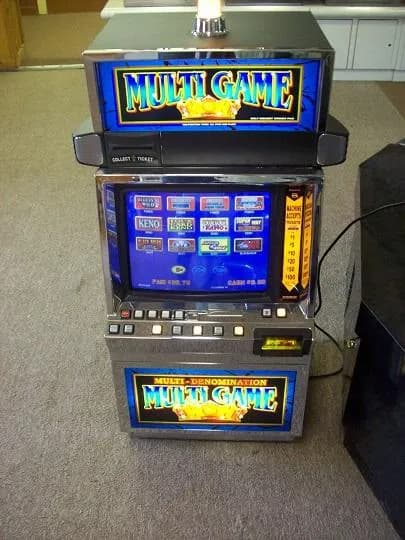
The 25-year rule dramatically expands your options if you live in one of these states. Ten years ago, qualifying machines were mostly mechanical reels and early video units from the 1980s. Now the rule encompasses sophisticated video slot machines with bonus rounds, multi-game platforms, and machines that feel very similar to what you would find on a casino floor today.
This also affects pricing. As machines cross the 25-year threshold, demand increases because a larger pool of buyers can legally purchase them. Popular titles from the late 1990s have seen price increases as they become available to buyers in restrictive states. If you have your eye on a specific game from 2002 or 2003, buying it now and storing it until it qualifies might save you money compared to waiting for the rush.
How to Verify a Machine's Manufacture Date
Every slot machine has identification that establishes its manufacture date. Here is how to verify.
The serial number plate is typically located on the inside of the main door or on the cabinet frame. IGT machines use a format that includes the manufacture date directly. Bally machines have production codes that correspond to manufacture quarters.
The game EPROM or software chips inside the machine contain version dates. While these can be updated, the original hardware platform date is what matters for legal purposes.
Manufacturer records exist for all machines produced for regulated casino markets. IGT, Bally, and other manufacturers kept detailed production records. As a dealer, I can provide manufacture documentation for any machine in our inventory.
Cabinet style and hardware generation also help identify era. An experienced dealer can tell you within a year or two when a machine was made just by looking at the cabinet design, button layout, and display type.
When you buy from us, every machine ships with documentation including its manufacture date and serial number verification. This gives you proof of antique status if it is ever questioned.
Common Misunderstandings
The biggest misunderstanding is that the 25-year rule means you can operate the machine for gambling. It does not. In virtually every state, private ownership for personal use and entertainment is what these laws allow. You cannot charge people to play, offer real payouts, or operate the machine commercially without a gaming license.
Another common confusion is thinking the rule applies to when the machine was removed from service. A machine manufactured in 2005 but retired from a casino in 2010 is still only 21 years old in 2026. Manufacture date is the only date that matters.
Some people believe they need to disable the machine or make it non-functional to own it legally. In 25-year-rule states, this is not the case. The machine can be fully operational. It just cannot be used for commercial gambling.
Finally, some buyers think they need a special license or permit to own an antique slot machine. In most 25-year-rule states, no license is required for personal ownership. You buy it, you own it, you enjoy it at home. Some states require you to register the machine or notify local authorities, but this is rare and straightforward when it applies.
The Bottom Line
The 25-year rule has opened up slot machine collecting to millions of Americans who previously thought it was illegal to own one. With machines from 2001 and earlier now qualifying, you have access to sophisticated video slots, multi-game platforms, and classic reel machines that deliver an authentic casino experience at home.
If you are unsure about your state's laws, give us a call. We have been shipping machines to all 50 states since 1992 and we know exactly what is legal where. We will never sell you a machine that you cannot legally own in your state. That is part of the service when you buy from a dealer who has been doing this for over three decades.