
How Does a Slot Machine RNG Work? What Every Home Owner Should Know
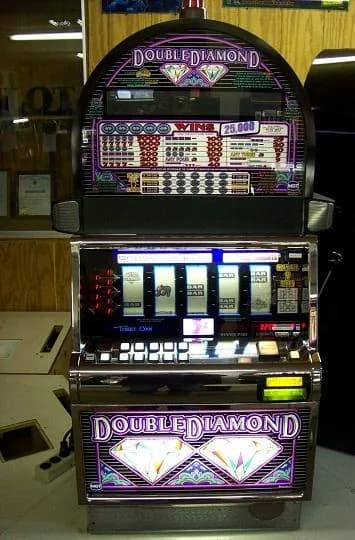
Ever wondered if your home slot machine is truly random? A 34-year slot machine dealer explains exactly how the random number generator works — and what it means for home play.
The question comes up every week. Someone who just bought their first home slot machine calls us and asks some version of the same thing: is this machine actually random, or is it programmed to pay out at certain times? Can I predict when it's going to hit? Does it know I've been winning and adjust to take my money back?
These are fair questions. After 34 years of selling slot machines from our showroom in Kingman, Arizona, we have heard every variation. And the answers matter — not just as trivia, but because understanding how your machine works helps you enjoy it properly.
Here is the complete, accurate explanation of how slot machine random number generators work, written for home buyers rather than engineers.
What Is a Random Number Generator?
A random number generator — RNG for short — is a microchip inside the slot machine that runs a continuous mathematical algorithm. Its job is to produce a stream of numbers, one after another, at extremely high speed. The machine uses those numbers to determine every outcome: which symbols land on each reel, whether you win, and how much.
The term "random number generator" is technically a slight misnomer. What slot machines actually use is a pseudo-random number generator, or PRNG. The "pseudo" part means the numbers are not generated by a truly random physical process — they come from a mathematical formula. However, the formula is so complex that the results are, for all practical purposes, unpredictable. Nobody — not the player, not the casino, not the manufacturer — can predict the next number in the sequence from the outside.
This distinction does not affect how your machine plays. Whether the randomness is "true" or "pseudo," the result is the same: every spin is unpredictable.
How the PRNG Actually Works
Here is the mechanism in plain English.
The Seed Number
Every PRNG starts with a number called the seed. Think of the seed as the starting point for the mathematical calculation. The algorithm takes the seed, runs it through a complex formula, and produces a new number. That new number becomes the seed for the next calculation. And so on, continuously.
The seed changes constantly. Most modern slot machines use the machine's internal clock — measured in milliseconds — as part of their seeding process. Because the clock is always running and is measured in increments smaller than human reaction time can control, the seed at any given moment is effectively unpredictable from the outside.
The Generation Speed
The PRNG does not wait for you to press spin. It runs continuously, generating hundreds of numbers per second, every second the machine has power — even when no one is playing, even in the middle of the night.
When you press the spin button, the machine reads whichever number the PRNG happens to be on at that exact moment. That number determines the outcome. A fraction of a second earlier or later would have produced a completely different result.
This is the fundamental reason why timing does not work. The difference between one spin and the next — measured in the PRNG's terms — is not one number but hundreds or thousands of numbers generated in the time between your button presses. There is no rhythm to exploit, no pattern that repeats on any human-accessible timescale.
From Number to Reel Outcome
The number the PRNG produces does not directly tell the machine "show a Double Diamond symbol on reel one." Instead, it maps to a position on a virtual reel.
Each physical reel in a mechanical slot machine corresponds to a virtual reel stored in the machine's software. The virtual reel contains a list of positions — far more positions than the physical reel has symbols. Each position on the virtual reel maps to a physical reel stop (a specific symbol).
The PRNG number selects a position on the virtual reel. That position tells the stepper motor driving the physical reel exactly where to stop. The symbol at that stop is what you see.
The distribution of positions on the virtual reel is how the pay table probabilities are implemented. A jackpot symbol might appear on the physical reel three times, but on the virtual reel its positions might occupy only 1 out of 256 entries. Common low-paying symbols appear much more frequently on the virtual reel. This is how the manufacturer programs the machine's payout percentage.
Each Spin Is Completely Independent
This is the most important concept for any slot machine player or home owner to understand.
The outcome of each spin has no relationship to the spin before it or the spin after it.
The PRNG does not track your session. It does not know you have been playing for an hour. It does not know you just won three times in a row. It does not "know" anything about your history. It simply produces the next number in the sequence at the moment you press spin.
This independence has two practical implications.
There Is No Such Thing as a "Due" Machine
A machine that has not paid a large win in 500 spins is not more likely to pay one on spin 501. The 500-spin history is irrelevant. Each spin evaluates fresh against the PRNG output.
This is mathematically provable and universally true for properly functioning PRNG-based slot machines. The intuition that a machine is "due" for a win is called the gambler's fallacy — the incorrect belief that past independent events influence future independent events. They do not.
Hot and Cold Machines Do Not Exist
A machine is not on a "hot streak" any more than a coin that just landed heads five times is likely to land heads again. The PRNG does not cycle through hot and cold phases. A sequence of wins tells you nothing about what comes next.
Over a very large number of spins — tens of thousands — a machine's actual payout percentage will converge toward its programmed payout percentage. But over any individual session or even any individual day, the variance can be significant in either direction. Short-term results do not indicate machine "temperature."
How RNGs Were Certified Before the Machine Left the Casino
Every slot machine manufactured for use in licensed casinos — including every machine we sell — was tested and certified before it ever touched a casino floor.
State gaming commissions and independent testing laboratories (the most prominent being Gaming Laboratories International, or GLI) test slot machine software before approval. The PRNG algorithm must meet specific standards for statistical randomness, unpredictability, and resistance to manipulation. Manufacturers submit their game software for review, and testing laboratories run millions of simulated spins to verify that the outcomes conform to the expected statistical distribution.
This certification process is rigorous. Machines that do not pass do not get deployed. Every major manufacturer — IGT, Bally, Aristocrat, WMS, Konami — had their PRNG implementations certified by independent labs as a condition of selling to licensed casinos.
When you buy a used casino slot machine from us, you are getting a machine with certified, tested RNG hardware. We have not modified the software. The machine that sat on a casino floor for years is the same machine that arrives at your home.
What RNG Means for Home Use
There are a few things worth understanding about how the RNG operates differently in a home setting compared to a casino.
No Casino Oversight — But It Doesn't Matter
In a casino, the gaming commission monitors machines for compliance. In your home, there is no such oversight. But the PRNG hardware is the same — it was certified when the machine was manufactured, and it operates the same way regardless of where the machine is located.
The absence of oversight does not mean the machine becomes non-random. The RNG chip is doing the same thing it always did. Home use simply means the regulatory audit layer is absent — the math is unchanged.
Free Play Mode Operates the Same RNG
If you use your machine in free-play mode — where credits are added by button press rather than by inserting coins — the RNG operates identically to coin or bill mode. The PRNG runs continuously, every spin is determined by the number at the moment you press, and the probability distributions are unchanged. Free play mode affects how credits are added, not how outcomes are determined.
Most of our home customers run their machines in free-play mode because it eliminates coin management. Our free-play mode guide explains exactly how to set this up.
You Cannot Predict Outcomes — and You Wouldn't Want To
Because the PRNG generates hundreds of numbers per second and your button press selects the current number, there is no viable way to time a spin for a specific outcome. The variation between any two button presses involves thousands of generated numbers. Even if someone knew the algorithm and the seed, they could not react fast enough to select a specific outcome with any reliability.
For home use, this means your machine plays honestly every time. The surprise is the point.
Pay Tables and Return to Player (RTP)
The PRNG determines the outcome of each spin. The pay table determines how much each outcome pays. Together, these two elements define the machine's theoretical Return to Player, or RTP — the long-run percentage of money wagered that the machine pays back as wins.
A machine with an 85% RTP will, over millions of spins, return approximately 85 cents for every dollar wagered. The casino keeps the remaining 15 cents — that is the house edge.
For home use, RTP is academic. Since you are not running a business or competing against a house, the RTP simply describes the shape of your long-term variance curve. A higher RTP machine is more volatile in the short run (bigger swings) than a lower RTP machine, but neither is predictable on any given session.
Most used casino machines have RTPs in the 85%–95% range. This was set by the manufacturer at production time and is programmed into the game software on the EPROM chip. The casino could not change it — neither can you, without a chip replacement.
If you want to explore a different RTP configuration, the S2000 platform allows game chips (EPROMs) to be swapped. Different chips represent different game titles and different pay tables. We can help you source chips if you want to change your machine's game.
Mechanical Reels vs. Video Slots — Does the RNG Work the Same Way?
Yes, with minor technical differences in implementation.
In a mechanical reel machine like the IGT S2000, the PRNG output maps to positions on virtual reels, and stepper motors drive the physical reels to those positions. The spinning reels you see are the physical reels landing on their programmed stops.
In a video slot machine like a Bally Alpha or WMS Bluebird, there are no physical reels. The PRNG output maps to symbol positions on screen, and the animated reel spin you see is purely visual. The outcome was determined the moment you pressed the button — the animated spin is a display.
Both types use the same fundamental PRNG architecture, certified to the same standards, producing outcomes that are statistically independent spin-to-spin.
Frequently Asked Questions
Can the machine be set to pay out more at certain times?
No. A properly functioning slot machine cannot be set to pay more at night, on weekends, or at any other specific time. The PRNG operates identically regardless of the time of day or how busy the machine is. Stories about casinos "loosening" machines at certain hours are not supported by how the hardware works.
Does the machine know when I've been winning?
No. The PRNG has no memory of your session results. It does not track whether you are ahead or behind, how long you have been playing, or how much you have wagered. Each spin evaluates independently against the current PRNG output.
Can I improve my odds by pulling the handle slower or faster?
No. The PRNG generates numbers continuously regardless of how fast or slow you pull or press. The number selected is whichever one the PRNG is on at the exact moment of activation — something you cannot control with any level of timing precision.
Does playing maximum credits affect the RNG?
Max credit play changes the pay table — most machines pay proportionally more for certain wins on max bet, and some jackpots require max credits. But it does not affect the PRNG itself. Max credits do not increase your probability of any particular symbol combination. They increase what you receive if certain winning combinations appear.
Is the RNG in my home machine still accurate after years of use?
Yes. The PRNG is implemented on a chip that does not wear or drift over time the way mechanical components can. The algorithm runs the same whether the machine was just refurbished or has been in service for 20 years. Our refurbishment process confirms that game chips are verified before each machine ships.
What if someone told me their machine was paying out in cycles?
This is a widely held misconception. What people observe as cycles are the result of variance — the natural statistical clustering of wins and losses that happens in any random system over a finite sample. If you flip a coin 20 times, you might see 14 heads in a row. That does not mean the coin is cycling. Slot machines exhibit the same variance. What feels like a cycle is variance presenting itself over a human-scale session, not a programmed pattern.
Can the manufacturer or casino remotely change the RNG outcomes?
No. The machines we sell are decommissioned from casino floors and no longer connected to any casino network. In their operational context, casino slot machines were not remotely controlled for outcome manipulation — that would violate gaming regulations. In your home, the machine has no network connection of any kind. It operates as a standalone device.
Does the RNG ever repeat patterns?
All PRNGs have a theoretical period — the number of outputs before the sequence mathematically repeats. For modern slot machine PRNGs, this period runs into the billions of numbers. A home slot machine played for a few hours a week would take thousands of years to reach the repeat point. In practical terms, the sequence never repeats within any observable timeframe.
The Bottom Line for Home Buyers
Your slot machine's RNG is doing exactly what it is supposed to do: generating unpredictable outcomes, continuously, without memory of past results. The machine is not hot or cold, due for a win, aware of your session, or cycling through programmed patterns. Each spin is genuinely independent.
This is actually good news. It means you are getting an honest game every time you play. The same certified hardware that satisfied gaming commissions across the country is sitting in your game room, working correctly.
If you have questions about the specific machine you own or want to discuss how the RNG interacts with your machine's free-play settings, contact us. We have been working on these machines since 1992 and can walk you through anything.
Browse our current inventory if you are still looking for the right machine, or check our warranty and support page to see what we back every purchase with. For a broader look at how these machines work and what to expect as a home owner, our complete slot machine buyer's guide covers the full picture.