How Slot Machine RNG Works: What Every Home Owner Should Know
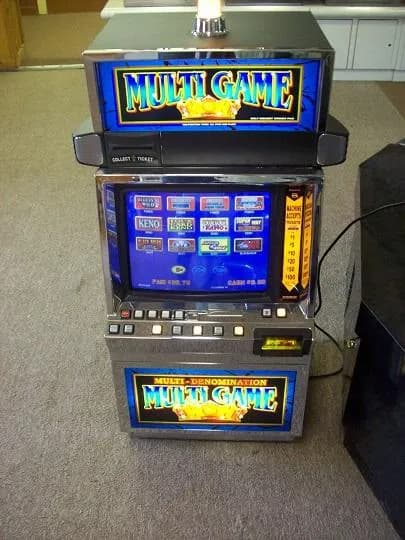
Can you adjust how often your slot machine pays out? Does it go hot and cold? A 34-year dealer explains exactly how the Random Number Generator works — and what it means for home owners who want to understand their machine.
One of the most common questions we hear from new slot machine owners is some version of: "Can I adjust how often it pays out?" or "Does it go hot and cold?" or "Is there a pattern to when it wins?"
These questions come from genuine curiosity about the mechanics underneath the game. After 34 years of selling and servicing slot machines, we are happy to explain exactly how the technology works. Understanding your machine makes you a better owner — and puts some persistent myths permanently to rest.
The Engine Inside Every Slot Machine: The RNG
Every slot machine manufactured for casino use — from the mechanical-reel IGT S2000 in a home game room to the largest video displays on the Las Vegas Strip — operates on the same fundamental principle: a Random Number Generator, or RNG.
The RNG is a computer program that runs continuously inside the machine, generating a stream of numbers at thousands per second — even when the machine is idle, even when it is powered on but no one is playing. Each number in that stream corresponds to a specific reel outcome.
When you press the spin button, the machine reads the RNG's current number at the precise microsecond your finger contacts the button, and that number determines the reel positions. The reels spin afterward — but they are a display. The outcome was determined the instant you pressed.
This is why the timing of your button press is, from a practical standpoint, effectively random — a fraction of a second earlier or later produces a completely different result.
PRNG: How Computers Generate Randomness
Modern slot machines technically use a Pseudo-Random Number Generator (PRNG). True randomness — produced by radioactive decay or atmospheric noise — is impractical in commercial gaming equipment. Instead, a PRNG uses a complex mathematical algorithm.
The algorithm takes a starting value called a seed and performs calculations that produce an unpredictable sequence of numbers. The sequence appears random and, for all practical purposes, is random — no player can predict it and no technician can predict it.
Before any machine is certified for casino use, independent testing laboratories verify the PRNG meets strict randomness standards and that payouts over millions of simulated spins match the theoretical percentages in the game chip. The agencies that certify slot machine RNGs include:
- Gaming Laboratories International (GLI) — the most widely recognized certifier worldwide
- eCOGRA (eCommerce and Online Gaming Regulation and Assurance)
- iTech Labs
- BMM Testlabs
These organizations test not just whether numbers appear random, but whether actual payout percentages over millions of simulated spins match the game's theoretical specification.
The Virtual Reel: Why Symbol Odds Are Not What They Look Like
Here is the concept that surprises most first-time machine owners.
On a three-reel machine like the IGT S2000 Double Diamond, each physical reel appears to have a fixed number of stops — typically 22 positions on the reel strip. You might assume each symbol has an equal probability of landing on the payline.
That is not how it works.
Each physical reel is mapped to a virtual reel — a software construct with more stops than the physical reel. A physical reel with 22 positions might map to a virtual reel with 128 stops. Common symbols correspond to many virtual stops and appear relatively often. Jackpot symbols correspond to very few virtual stops — sometimes just one or two out of 128 — making them rare even though they appear the same size as every other symbol on the reel strip.
When the RNG generates a number, it selects a virtual stop position. The physical reel moves to the corresponding physical position. The jackpot symbol combination might have a 1-in-32,768 overall probability, while a single-bar combination appears on nearly every other spin.
This is not deception — it is how slot machines are engineered to deliver specific theoretical payout percentages while producing entertaining play at various win levels. Virtual reel mapping is disclosed in each machine's gaming certification documentation.
What RTP Means for Home Owners
RTP stands for Return to Player — the percentage of money wagered that the machine pays back over time. An RTP of 94 percent means that over millions of spins, the machine returns $94 for every $100 wagered.
RTPs in physical casino slot machines typically range from 85 to 94 percent. High-traffic casino floors often run tighter settings because volume compensates for lower per-dollar return. Lower-traffic locations tend toward looser settings to retain players. Most online slots run 94 to 99 percent because online operators carry lower overhead than physical casinos.
These are theoretical long-run averages. On any given session — even thousands of spins — actual outcomes can vary significantly from the theoretical RTP. This is variance or volatility. Over millions of spins, actual payouts converge on the theoretical RTP. Over a single session, results can run far above or below it in either direction.
Can You Change the RTP on a Home Machine?
Some machines allow the operator to select from pre-configured payout settings through the operator menu. This is more common on Bally, WMS, and Konami platforms, where the operator menu may offer choices such as 87%, 90%, 93%, or 96% theoretical RTP. Multiple payout tables are stored on the game chip and the menu lets you select which is active.
On IGT S2000 machines with standard game chips, payout percentage is fixed by the chip programming. Changing it requires sourcing a chip with different payout tables — possible, but not something most home owners do.
For home use, RTP is largely irrelevant when running in free play mode, which most home owners prefer. There is no real money wagered or paid out. The RNG still operates normally — all bonus features, reel mechanics, and game logic work exactly as designed — but no money changes hands.
Common Myths the RNG Eliminates
Myth: Hot and Cold Machines
"This machine hasn't paid in a while — it's due." Mathematically false. The RNG has no memory. Each spin is statistically independent of every prior spin. A machine that has not paid a jackpot in 50,000 spins has exactly the same probability of paying on spin 50,001 as it did on spin 1. RTP is about long-run averages — not cycle-by-cycle debt.
Myth: Time of Day Affects Payouts
The PRNG algorithm runs identically 24 hours a day, 7 days a week. There is no clock-based adjustment to payout rates. Licensed casinos cannot legally alter machine RTPs based on time of day, and the machine itself has no mechanism for it.
Myth: The Jackpot Is Overdue
If a jackpot combination has a 1-in-32,768 probability on any given spin, it has that same probability on every spin, regardless of how long since the last jackpot. Jackpots are never mathematically overdue.
Myth: Pressing Faster Changes Results
The PRNG generates numbers continuously. The exact microsecond of button contact determines which number is read. Pressing faster or slower does not change the statistical distribution of outcomes. Only the specific timing matters, and that timing is beyond human control at a microsecond scale.
Myth: Machines Cycle Hot and Cold
There is no hot-to-cold cycling and no pattern. Every spin is statistically independent. Pattern-seeking in slot machine results is a well-documented cognitive bias — the human brain finds patterns in random data even when none exist. The machine produces no patterns.
What This Means for Home Owners
Play for the experience. The RNG ensures no strategy, timing trick, or pattern recognition improves long-term results. The entertainment value is the game itself — the spinning reels, the sound design, the anticipation of a bonus.
Free play removes the math entirely. In free play mode, the RNG determines outcomes normally but nothing is at stake. You enjoy every game feature — bonus rounds, wheel spins, multi-screen interactions — without any financial element. This is how most home owners run their machines.
Selectable RTP lets you tune the feel. On machines that support it, choosing a higher theoretical RTP produces more frequent wins, typically smaller ones. Some home owners prefer this looser feel for casual, social play.
The machine is indifferent. The RNG does not adapt to players or sense patterns. It generates numbers according to its programming, completely indifferent to outcomes. The house edge is in the payout table mathematics — not in any active decision by the machine.
Technical Notes for Machine Owners
Memory Backup Battery
The PRNG seed and machine settings are stored in battery-backed memory — typically a CR2032 coin cell on IGT S2000 machines. When this battery dies, the machine can lose its settings or even game software in some configurations. Battery life is typically 7 to 10 years.
We replace backup batteries before shipping every machine we sell. If your machine starts losing configuration after years of ownership, the backup battery is the first thing to check. Replacement is a straightforward task.
The RNG Never Stops
The PRNG runs whenever the machine is powered on, advancing its number sequence every microsecond. This continuous operation is part of why each button press produces a different result — you cannot predict or control the number the machine reads at the moment of contact.
Error Codes and the Main Board
The main board houses the PRNG chip and game logic. Many main-board error codes clear with a power cycle (off, 30 seconds, on). Persistent errors may indicate a component issue. Our free lifetime tech support covers diagnosing any error code at no charge — call us and we walk you through it.
Summary
The RNG is the heart of every slot machine. It generates thousands of numbers per second, determines outcomes at the instant of button contact, and produces statistically independent results on every single spin. There are no hot machines, no cold machines, no patterns, no timing tricks, and no overdue jackpots. There is only mathematics — engineered to produce an entertaining game with specific theoretical payout characteristics over long periods of play.
Understanding this makes the machine more enjoyable, not less. It eliminates frustration from chasing patterns that do not exist.
Browse our full inventory of refurbished slot machines, read our complete buyer's guide, or contact us with any questions. We have been explaining this to home buyers for 34 years and are happy to help.
See also: Complete Slot Machine Buyer's Guide | How Much Does a Slot Machine Cost? | Slot Machine Maintenance: Homeowner's Guide