What Happens When Casinos Retire Slot Machines? The Journey From Casino Floor to Your Home
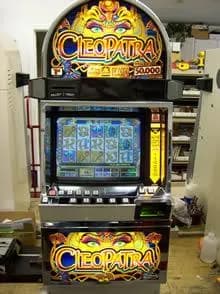
A 33-year veteran dealer explains exactly what happens when casinos remove working slot machines — and how those machines end up refurbished and ready for your game room.
Every slot machine you see in our inventory spent years on a real casino floor. These are not reproductions, knock-offs, or home-use imitations. They are the genuine article — the same machines that entertained thousands of casino visitors before being retired and finding a second life in someone's home.
But why would a casino get rid of a perfectly working slot machine? And what happens between the day it leaves the casino floor and the day it arrives at your door? After 33 years of buying retired machines from casinos, refurbishing them, and selling them to home buyers, we have a front-row seat to this process. Let us walk you through the entire journey.
Why Casinos Replace Working Machines
This is the question that surprises most people. The machines are not broken. They are not worn out. In most cases, they are running perfectly. So why does a casino spend millions replacing them?
Revenue Per Square Foot
A casino floor is real estate, and every square foot needs to earn its keep. Casino operators track revenue per machine with forensic precision. They know exactly how much each machine earns per day, per week, per month. When a machine's daily revenue drops below a threshold — even if it is still profitable — it becomes a candidate for replacement.
A newer machine with a trendy theme, better graphics, and more engaging bonus features will almost always out-earn an older machine in the same spot. The casino is not looking at whether the old machine makes money. They are looking at whether a new machine would make more money in that same square footage. The answer is almost always yes.
Player Demand for New Games
Casino visitors want novelty. They have seen Double Diamond a thousand times. When a manufacturer releases a new game with a popular licensed theme — a hit TV show, a movie franchise, a celebrity brand — players flock to it. Casinos must constantly rotate in new titles to keep their floor feeling fresh.
This is the same psychology that drives the video game industry. Players always want the next thing. Casinos that do not refresh their floors lose visitors to competitors who do.
Manufacturer Lease Agreements
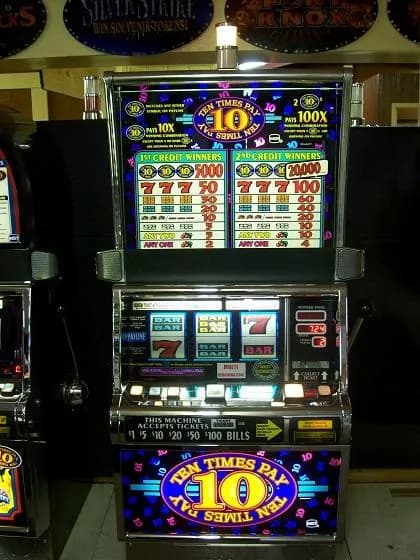
Many newer machines are not purchased outright by casinos — they are leased from manufacturers under revenue-sharing agreements. When the lease expires or a newer model becomes available, the leased machines go back to the manufacturer. This creates a steady stream of returned machines that eventually enter the secondary market.
Regulatory Requirements
Some gaming jurisdictions require periodic technology updates. A state gaming commission might mandate that all machines on the floor support a certain type of player tracking system, a specific communication protocol, or a new security standard. Older machines that cannot be upgraded to meet the new requirement must be removed.
Floor Renovations
Casinos periodically renovate sections of their floor. A redesign might change the layout, reduce total machine count in favor of table games, or shift to a different cabinet style for aesthetic consistency. Machines that do not fit the new vision get pulled regardless of performance.
Typical Casino Floor Life: 3 to 7 Years
The average slot machine spends 3 to 7 years on a casino floor before retirement. High-performing machines in prime locations might last 7 to 10 years. Underperformers in competitive markets might be pulled after just 2 to 3 years.
During that time, the machine runs nearly 24 hours a day, 7 days a week. A machine with 5 years of casino service has accumulated roughly 40,000 hours of continuous operation. That sounds like a lot — and it is — but these machines are built for exactly that kind of duty cycle. Commercial slot machines are engineered to the same reliability standards as industrial equipment.
To put it in perspective: if you play your home machine 2 hours per day, every single day, it would take you 55 years to accumulate the same operating hours as 5 years of casino service. The machine in your game room is essentially barely broken in by commercial standards.
What Happens at Retirement
When a casino decides to retire a group of machines, the process follows a fairly standard pattern across the industry.
Step 1: Decommissioning
The machine is powered down and disconnected from the casino's central monitoring system. The progressive link (if any) is severed. Player tracking hardware specific to that casino is removed. The machine's memory is cleared of revenue data and player information.
Step 2: Regulatory Compliance
In jurisdictions that track gaming devices, the casino files paperwork with the gaming commission indicating the machine is being removed from active service. The machine's gaming license for that specific location is surrendered.
Step 3: Bulk Sale to Dealers
Casinos do not sell machines one at a time to individual buyers. They sell in bulk — often hundreds of machines at once — to licensed dealers and distributors. This is where we come in.
We have relationships with casinos and casino equipment liquidators across the country. When a property retires a bank of machines, we get the call. We evaluate what is available, negotiate pricing, and arrange transportation from the casino to our facility in Kingman, Arizona.
A typical purchase might be 50 to 200 machines from a single property. We select based on platform, condition, and game popularity. Not every retired machine is worth refurbishing. We pass on machines with obsolete platforms, rare cabinets with no parts availability, or models with limited home-market appeal.
Step 4: Transportation
The machines are palletized at the casino and shipped via freight truck to our facility. They arrive shrink-wrapped and strapped to pallets, usually in good physical condition. Casino machines are handled carefully during removal because the casino wants to maximize their resale value.
The Refurbishment Process
This is where a retired casino machine becomes a home-ready entertainment device. Our refurbishment process is thorough and systematic. Every machine goes through the same steps regardless of its apparent condition.
Complete Disassembly and Inspection
We open every door, remove every accessible component, and inspect the machine inside and out. We are looking for worn parts, loose connections, corroded contacts, damaged wiring, cracked plastics, and anything that might cause a problem down the road.
Casino machines accumulate cigarette smoke residue, dust, spilled drinks, and general grime over years of public use. The first step is getting everything clean so we can see what we are actually working with.
Electronics Testing and Repair
The main board, game board, power supply, and all electronic subsystems are tested individually. We check voltages, verify chip integrity, test memory batteries, and clear any error codes. Boards with issues are repaired at the component level or replaced entirely.
Power supplies are load-tested. A power supply might appear fine at idle but fail under the full load of a spinning reel motor and illuminated displays. We catch those failures during testing so you never encounter them at home.
Mechanical Component Service
Reel motors are inspected and lubricated. Coin mechanisms are disassembled, cleaned, and rebuilt with new springs and contacts where needed. Bill validators are cleaned, calibrated, and tested with multiple bill denominations. Button switches are tested and replaced if they feel mushy or inconsistent.
Display Calibration and Repair
CRT monitors on older machines are adjusted for brightness, focus, color balance, and geometry. Caps are replaced if the monitor shows signs of age (dim image, color shift, or geometric distortion). LCD displays are checked for dead pixels, backlight uniformity, and touch calibration.
Cosmetic Restoration
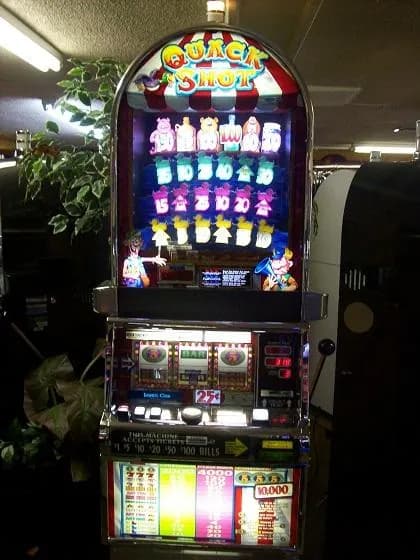
The cabinet is cleaned, polished, and touched up. Chrome trim is polished or replaced. Glass panels are cleaned and inspected for chips or cracks. Belly glass and top glass are some of the most visible elements — if they are faded, scratched, or damaged, we replace them. Decals and overlays are replaced if worn.
The goal is not making the machine look brand new — that would be dishonest. The goal is making it look great. Like a well-maintained machine that has been cared for, not like one that just survived five years of 24/7 public abuse.
Configuration for Home Use
Casino machines have configurations specific to casino operation — denomination settings, payout percentages for regulatory compliance, player tracking system integration, and more. We reconfigure each machine for optimal home use.
This includes setting the machine to accept quarters or tokens (or free-play mode), configuring the volume to reasonable levels, clearing all casino-specific data, and ensuring the bill validator works with current US currency.
Play Testing
Every refurbished machine is played through extended testing cycles before approval. We play every game, trigger every bonus feature, test every payout level, and verify every display element. If anything is not right, it goes back to the bench.
Why Retired Does Not Mean Broken
This is the most important point in this entire article. Casinos do not retire machines because they stop working. They retire them because newer machines earn more money per square foot.
The machine that sits in your game room was generating revenue for the casino on its last day of service. It was working perfectly. Players were sitting in front of it, feeding it bills, and enjoying the gameplay. The casino replaced it with something newer — not something that worked better.
Consider this analogy: a rental car company retires vehicles at 30,000 to 50,000 miles and buys new ones. Not because the old cars are broken, but because new cars attract more customers. The retired rental car still has 150,000 or more miles of life left in it. Same principle applies to slot machines.
When you buy a refurbished machine from us, you are getting a device that was engineered for 100,000+ hours of continuous operation, used for maybe 30,000 to 50,000 hours, professionally serviced, and then sent to your home where it will see perhaps 500 hours per year. The math works overwhelmingly in your favor.
How Machines End Up at Used Slot Shop
Our specific supply chain works like this.
We maintain relationships with casinos and liquidators across Nevada, Arizona, California, and other gaming states. When properties refresh their floors, we are among the first calls they make. We have been in this business since 1992, and many of these relationships go back decades.
We are selective about what we buy. Out of a batch of 200 retired machines, we might take 80 to 120 depending on what we need for inventory. We focus on platforms with strong home-market demand: IGT S2000, Game King, Bally Alpha, WMS Bluebird, Aristocrat, Konami, and similar proven favorites.
Every machine we buy goes through our complete refurbishment process, gets our 1-year warranty, and comes with free lifetime tech support. We currently have 334 machines in stock representing the best of what we have sourced and refurbished.
The Economics: Why This Is a Good Deal for Buyers
A new slot machine costs a casino $15,000 to $25,000 or more. The machine depreciates rapidly on the casino's books — most are fully depreciated within 3 to 5 years for accounting purposes, regardless of their actual condition.
When that machine is retired and sold in bulk to a dealer, the casino might receive $200 to $800 per unit depending on model and condition. The dealer (us) invests $200 to $500 in refurbishment labor and parts per machine. The machine then sells to a home buyer for $995 to $3,500 depending on model and configuration.
So a machine that cost $18,000 new and has decades of life remaining sells for $1,500 to $2,500 as a refurbished home machine. That is outstanding value. You are getting commercial-grade entertainment equipment built to standards far exceeding any consumer product, at a fraction of its original cost.
What to Look For When Buying a Retired Casino Machine
If you are buying from a reputable dealer (like us), the machine has been professionally refurbished and you do not need to worry about most of these factors. But for your own education — or if you are considering buying from a private seller — here is what matters.
Platform Age and Parts Availability
Older platforms may be harder to service long-term as parts become scarce. The IGT S2000 has excellent parts availability because millions were produced. More exotic platforms may not. Ask about parts availability before buying.
Casino of Origin
Machines from well-maintained, high-end properties tend to be in better condition than those from smaller, lower-budget operations. Not a hard rule, but a general trend.
Service History
A machine that was regularly serviced during its casino life will be in better internal condition than one that was run until it failed. Dealers who buy from quality properties get better raw material to refurbish.
Smoke Exposure
Casinos in smoking-allowed jurisdictions produce machines with significantly more internal contamination. Smoke residue coats components and can accelerate corrosion. Proper refurbishment removes this, but it is one reason why thorough cleaning is so important.
Ready to Own a Piece of Casino History?
Every machine in our showroom has a story. It spent years entertaining visitors on a real casino floor. It paid out jackpots, triggered bonus rounds, and created memories for thousands of players. Now it is ready to do the same in your home.
Browse our current inventory of 334 machines, read our complete buyer's guide, or review our warranty and support to understand exactly what you get when you buy from us. We ship nationwide and are happy to answer any questions — just contact us.
Your next slot machine had a previous life. That is not a drawback. That is proof it was built to last.