Monopoly Slot Machine for Sale: WMS Home Buyer's Complete Guide
Monopoly is one of the most iconic casino games ever made. Here's everything home buyers need to know about WMS Monopoly machines — which versions are legal in your state, what they cost, and what to look for when buying.
If you want a slot machine that stops people in their tracks, Monopoly is hard to beat. Everyone knows the game. Everyone has played the board game. Walk a guest into your game room and point them at a Monopoly slot machine with its recognizable red and yellow colors, the little Rich Uncle Pennybags on the glass, and the iconic board laid out on the cabinet, and you have their attention immediately.
We have sold WMS Monopoly machines for home game rooms for over two decades. They are perennial favorites for exactly that reason — the license brings instant recognition and the game itself is genuinely entertaining. But there are important things to know before you start shopping, particularly around legal status and which versions are actually available on the secondary market.
Here is everything you need.
The History of Monopoly Slot Machines
WMS Gaming secured an exclusive license with Hasbro (Monopoly's manufacturer) in the late 1990s to produce Monopoly-branded gaming machines. The first Monopoly machines appeared on casino floors in the 1998 to 1999 timeframe, making them among the earlier major licensed slot games in the industry.
The timing was significant. WMS was already known for innovative game design — their Reel 'Em In fishing bonus game had pioneered the second-screen bonus concept years earlier — and the Monopoly license gave them a brand with universal name recognition to work with. The result was a long-running franchise that produced dozens of distinct game titles and remained on casino floors for nearly two decades.
WMS held the Monopoly gaming license through at least 2016, when trade publications confirmed an extension of the existing agreement. Over that period, WMS produced more than 60 distinct Monopoly-branded game titles across multiple cabinet platforms. The breadth of the Monopoly catalog is remarkable — virtually every version of WMS gaming technology from the early 2000s through the mid-2010s has at least one Monopoly title attached to it.
WMS was acquired by Scientific Games in 2013, which later rebranded as Light and Wonder in 2022. The machines themselves were made under the WMS brand and are universally referred to as WMS Monopoly machines on the secondary market.
Why the Manufacture Date Matters So Much
Before diving into specific titles and versions, this is the most critical thing to understand as a home buyer.
Approximately 28 states restrict private slot machine ownership to machines manufactured 25 or more years ago — the so-called antique or 25-year rule. In 2026, any machine made in 2001 or earlier qualifies in those states.
The WMS Monopoly franchise spans machines from 1999 all the way through 2015 or later. That means some Monopoly machines now qualify in age-restricted states while newer versions do not. The qualification status depends entirely on when that specific machine was manufactured.
- Machines from 1999 and 2000: Fully legal in all age-restricted states as of 2024 and 2025. These are the oldest WMS Monopoly titles, produced on early WMS platforms.
- Machines from 2001: Hit the 25-year threshold in 2026. Legal in age-restricted states right now.
- Machines from 2002 and later: Not yet legal in age-restricted states. These become eligible progressively — 2002 models qualify in 2027, 2003 models in 2028, and so on.
This creates an interesting opportunity for buyers in age-restricted states: early WMS Monopoly titles are now crossing the threshold just as this guide is being written. If you have been waiting for a Monopoly machine to become legal in your state, the timing is right for the earliest versions.
For a complete explanation of your state's rules, read our state-by-state legal guide and our detailed breakdown of the 25-year rule.
Major Monopoly Slot Machine Versions
With dozens of titles across the WMS catalog, it helps to understand the major product lines and when they were made.
Early Monopoly Machines (1999–2002)
The first Monopoly machines ran on WMS platforms of the era, which were already well-established in casino service. These early titles typically featured three-reel or five-reel configurations with bonus rounds that incorporated Monopoly board game elements.
The bonus features in these early titles were genuinely creative for the time. Landing the right combination triggers a board-game-style bonus where you move around the Monopoly board collecting prizes — rents, utilities, railroad bonuses, and the coveted chance and community chest cards. The bonus round integrates the familiar Monopoly property colors, denominations, and game pieces into a slot format that feels natural rather than forced.
Machines from this era are the ones now qualifying under the 25-year rule. If you are in an age-restricted state, these are the versions to ask about.
Mid-Era Monopoly Machines (2003–2009)
As WMS upgraded their cabinet platforms through the mid-2000s, the Monopoly franchise moved with them. CPU-NXT-based machines introduced improved graphics, more elaborate bonus presentations, and larger displays.
Notable titles from this era include versions with progressive jackpot features and community bonus rounds where adjacent machines could trigger shared bonus events — a feature that worked well on casino floors but is primarily of academic interest for home buyers since most people run one machine.
The mid-era machines offered the most variety in the Monopoly franchise and represent a significant portion of what is available on the secondary market today. These machines will not qualify in age-restricted states until 2028 through 2034 depending on the specific manufacture year.
Bluebird and Bluebird 2 Monopoly Machines (2007–2016)
When WMS introduced the Bluebird and Bluebird 2 cabinet platforms — the same hardware that runs Zeus, Jungle Wild, and many other popular WMS titles — Monopoly followed. These newer versions feature large LCD displays, the dual-screen Bluebird 2 top box, and updated game presentations with more sophisticated animation and sound.
The Bluebird-era Monopoly games represent the most visually impressive versions of the franchise. A Bluebird 2 running a Monopoly title looks like a premium modern gaming machine. The displays are bright, the bonus presentations are cinematic, and the game themes have been refined over 15-plus years of iterations.
These machines will not qualify in age-restricted states for another decade or more. They are only available to buyers in the 13 unrestricted states.
Legal Status Summary
Here is a clear breakdown of who can own what.
Unrestricted States (Any Monopoly Machine)
These 13 states allow private ownership of slot machines of any age for personal use. Buyers here can own any version of the WMS Monopoly franchise:
- Arizona
- Nevada
- Texas
- Ohio
- Alaska
- Arkansas
- Kentucky
- Maine
- Minnesota
- Rhode Island
- Utah
- Virginia
- West Virginia
If you live in one of these states, you have the full range of WMS Monopoly options — from early 1999-era machines through the latest Bluebird 2 versions.
Age-Restricted States (Early Versions Only)
In the 28 states with a 25-year rule, only machines from 2001 and earlier are currently legal. That limits you to the earliest WMS Monopoly titles, but those machines are genuinely available and genuinely good.
As each year passes, another year's worth of machines become eligible. By 2030, machines through 2005 will qualify. By 2035, the Bluebird 2 era machines will start reaching the threshold.
Prohibited States
Nine states prohibit private slot machine ownership entirely: Indiana, Connecticut, South Carolina, Tennessee, Hawaii, Nebraska, Wisconsin, New Jersey, and Louisiana. We cannot ship any slot machine to these states.
What Makes Monopoly a Great Home Machine
The Monopoly license does something most slot machine themes cannot do: it gives every player an immediate frame of reference. You do not have to explain the game to anyone. The Monopoly board, the properties, the railroads, the chance cards — every guest at your gathering knows this world before they touch the machine.
This makes Monopoly machines exceptional for parties and gatherings. When guests see Boardwalk and Park Place, when they land on Free Parking during the bonus round, when they collect rent from a hotel on the red properties, they connect with it in a way that a generic mythological theme or a three-reel machine with bars and 7s cannot match. The license creates engagement.
Beyond the social dimension, Monopoly games are mechanically solid. WMS built these machines to the same standards as their entire catalog, and the Monopoly games have proven to be durable in casino environments over many years. In a home setting with moderate use, they will last decades.
The bonus rounds are the highlight. Most Monopoly versions include at minimum a board game bonus where you roll dice, move around the board, and collect property bonuses. Some versions add free spin features, progressive jackpots, and themed community chest and chance card events. The interactive nature of the bonus keeps sessions engaging in a way that simpler slot formats do not.
Pricing on the Secondary Market
WMS Monopoly machine prices on the secondary market vary considerably depending on the version, cabinet, and condition.
Early era machines (1999–2001): These are now in the $1,100 to $1,600 range from a refurbished dealer. The earlier platforms are mechanically simpler but fully capable machines. The fact that they now qualify in age-restricted states has created a modest uptick in demand.
Mid-era machines (2003–2009): Typically $1,300 to $1,900 refurbished, depending on cabinet quality and condition. These offer more sophisticated gameplay than the early versions but are limited to unrestricted states for now.
Bluebird and Bluebird 2 era (2007–2016): The premium versions, $1,500 to $2,400 from a reputable dealer. These feature the best displays, the most polished game presentations, and the most elaborate bonus features. Unrestricted states only.
As-is machines from liquidators and private sellers can appear at lower prices, but all the same cautions apply as with any used slot machine: no warranty, unknown service history, potential for hidden problems that cost more to fix than you saved.
Every Monopoly machine we sell comes fully refurbished with a 1-year warranty and free lifetime tech support.
What to Look for When Buying a Monopoly Machine
Verify the Manufacture Date
This is non-negotiable for buyers in age-restricted states. The machine's serial number and manufacturer's plate give the manufacture date. We document this for every sale to an age-restricted state and provide written confirmation that the machine meets your state's legal requirements.
If you are buying privately, get the manufacture date in writing before you complete the transaction. A seller who cannot tell you precisely when a machine was made should be treated with caution.
Test the Bonus Round
The Monopoly bonus is the heart of the game. Trigger the bonus and go through at least one complete board game sequence. The dice mechanism, the property landing animations, the rent collection, the chance and community chest cards — all of these should function correctly. A bonus round that partially works or behaves erratically indicates software or hardware issues.
Inspect the Displays
On older Monopoly machines with CRT monitors, check for brightness, color accuracy, and absence of burn-in. These machines often ran the same attract screen for years, which can leave a ghost image on CRT displays. On LCD-equipped machines (newer platforms), check for dead pixels, backlight uniformity, and contrast.
Check Cabinet Cosmetics
Monopoly machines often have distinctive glass panels featuring the Monopoly board and characters. These are cosmetically important and can be expensive to replace. Check the top glass, belly glass, and any lower panels for cracks, chips, or fading. A machine with damaged glass works fine mechanically but looks compromised in a game room setting.
Button Panel Condition
Press every button and verify responsiveness. The spin button and bet buttons see the most wear. Mushy or sticky buttons indicate worn microswitches that need replacement. This is a simple repair, but factor it into your assessment.
Maintaining Your Monopoly Machine at Home
WMS Monopoly machines require the same basic maintenance as any slot machine, with a few platform-specific notes.
The Monopoly licensing and graphics are largely on the glass panels and cabinet artwork rather than digital displays, so preserving that artwork matters. Clean the glass panels with ammonia-free glass cleaner on a soft cloth. Do not spray directly onto the glass — liquid can seep behind panels and damage printed graphics on the reverse side.
For machines with CRT monitors, follow the same monitor care guidelines as any vintage slot machine: allow adequate ventilation, do not leave the machine powered on continuously, and monitor for brightness degradation over time.
For Bluebird and Bluebird 2 machines, the dual LCD displays need periodic cleaning and the ribbon cable connections between displays should be checked annually to ensure they remain fully seated.
The bonus round mechanical components, if any — some versions have physical dice rollers or moving game pieces — should be inspected every six months and lubricated with light machine oil if they feel stiff. This is rare on home machines with moderate use but worth including in your annual inspection.
As with every machine we sell, free lifetime tech support is included. Any maintenance question is a phone call away.
Frequently Asked Questions
Is a Monopoly machine as good as any other WMS game?
Yes. The Monopoly games run on the same hardware platforms as every other WMS title. The cabinet, electronics, bill acceptor, and display systems are identical. The Monopoly branding is purely a game software and cosmetic overlay. Buy it for the game experience, not just the brand.
Can I set a Monopoly machine to free play mode?
Absolutely. Like every slot machine in our inventory, Monopoly machines can be configured for free play mode through the operator menu. In free play mode, you press a button to add credits without inserting anything. No coins, no bills, just play. This is the most popular configuration for home use. We set every machine to free play before shipping unless you specifically request otherwise.
Does the Monopoly theme affect resale value compared to other WMS games?
Monopoly machines hold their value well because the brand recognition is universal. When it comes time to sell, a Monopoly machine will find a buyer faster than a similarly priced machine with an obscure or generic theme. The license works in your favor both when you buy and when you eventually decide to sell.
What is the difference between Monopoly slot machines and the Monopoly board game with a slot machine?
Completely different products. There have been novelty electronic versions of the board game that look like slot machines but are toys — they have no casino mechanisms, no real reels or video poker math, and no bill acceptors. The machines we sell are real WMS casino machines with commercial-grade components that were manufactured for casino floor use. They are not toys.
Are all Monopoly slot machines made by WMS?
For physical casino-grade machines, yes — WMS held the exclusive license for manufacturing Monopoly gaming equipment. Other companies may produce Monopoly-themed online slots, but physical machines in the secondary market are WMS products.
How does the board game bonus work?
In most WMS Monopoly versions, landing a specific combination of symbols on the reels triggers the board game bonus. A dice roll mechanism advances your token around the Monopoly board. Each space you land on delivers a prize based on the property or event: properties pay rent (multiplied by any hotels), railroads deliver a cash prize, and Free Parking collects everything on the board. Chance and community chest cards add variable bonuses. The bonus ends when you land on Go To Jail or when a fixed number of rolls is completed depending on the version.
The Bottom Line
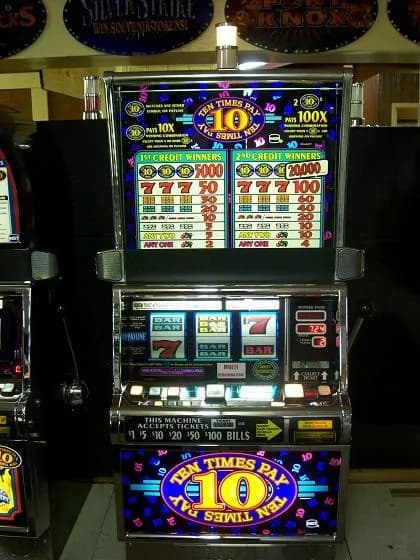
WMS Monopoly machines are among the most compelling and entertaining slot machines you can put in a home game room. The combination of universal brand recognition, genuinely fun bonus mechanics, and solid WMS hardware engineering creates a machine that works on every level — as entertainment for yourself, as a conversation piece for guests, and as a showpiece for any game room.
The key variable for home buyers is the legal status in your specific state. Early WMS Monopoly machines from 1999 through 2001 are now qualifying in age-restricted states, opening the franchise to a much broader audience than before. Buyers in unrestricted states can choose from the full range, including the most visually impressive Bluebird 2 era versions.
We have 334 machines in stock at our Kingman, Arizona location, and we source Monopoly titles regularly as they come off casino floors and through liquidations. Call us to ask what we currently have available, confirm what is legal in your state, and discuss the configuration that fits your space and budget. We have been doing this since 1992 and we are happy to help you find the right machine.