Slot Machines in South Carolina: Why Private Ownership Is Prohibited and What to Do About It (2026)
South Carolina prohibits private ownership of slot machines under S.C. Code § 12-21-2710, with no age-based exemption. Here is what the law says, how the 2000 video poker ban changed everything, and what South Carolina residents can legally do.
South Carolina has a complicated history with slot machines. For nearly a decade in the 1990s, the state had more video gambling terminals per capita than almost anywhere else in the country. Then, in July 2000, that era ended abruptly when a statewide ban took effect.
Today, South Carolina is one of nine states that prohibits private ownership of slot machines entirely — with no age-based exemption, no antique exception, and no personal use defense. If you live in South Carolina and want a slot machine for your home game room or man cave, we cannot ship one to your address.
This guide explains exactly what the law says, the history behind it, and what real options South Carolina residents have.
After 34 years of shipping machines from our Kingman, Arizona warehouse, we understand this answer is disappointing. Our goal is to give you accurate information and real alternatives, not vague suggestions or legal workarounds that put you at risk.
The Short Answer
South Carolina law makes it illegal to possess a slot machine in the state. The prohibition applies regardless of the machine's age, where you purchased it, or what you plan to use it for. There is no antique exemption, no 25-year grandfather clause, and no personal entertainment defense.
Under S.C. Code Ann. § 12-21-2710, possession of a slot machine — or any device "used or to be used" in connection with gambling — is prohibited. Violation is a criminal offense.
We do not ship to South Carolina addresses. No exceptions.
What South Carolina Law Actually Says
S.C. Code Ann. § 12-21-2710 prohibits "slot machines and certain other devices" in sweeping language. The statute covers any device used or usable in connection with gambling, and courts have consistently interpreted it broadly.
In March 2025, a South Carolina Court of Appeals decision reaffirmed the reach of the statute. The court held that the prohibition extends to any licensed device used for gambling, including skill-based gaming machines. This ruling was significant because it eliminated arguments that the law only covered traditional slot machines and not games that included skill elements. The 2025 decision confirmed that South Carolina's prohibition is among the most comprehensive in the nation.
The scope of the law covers:
- Traditional three-reel mechanical slot machines
- Video slot machines
- Video poker machines
- Electronic gaming terminals of any type
- Skill-stop machines, including pachislo-style cabinets
- Any device that accepts money or tokens and pays out based on a combination of symbols or cards
No Antique Exemption
This is the most common question we get from South Carolina residents. Most buyers have heard about the 25-year rule that governs many other states and assume something similar applies in South Carolina.
It does not.
South Carolina's statute contains no age-based exemption of any kind. A 1963 Mills mechanical slot machine — a genuine antique by any reasonable definition — is just as illegal to own in South Carolina as a machine that came off a casino floor last month. The law draws no distinction between eras, manufacturing periods, or technologies.
This places South Carolina alongside Indiana, Connecticut, Nebraska, Hawaii, Louisiana, Tennessee, Wisconsin, and New Jersey as one of nine states that maintain a total prohibition regardless of machine age.
The Video Poker History Behind the Law
To understand why South Carolina's law is as strict as it is, you need to understand the 1990s.
In the early 1990s, South Carolina entered a period of ambiguity in its gambling laws that allowed video poker machines to proliferate across the state. Gas stations, convenience stores, laundromats, and restaurants in every corner of South Carolina began installing the machines. By the late 1990s, estimates put the number of video gambling terminals in South Carolina at approximately 29,000 machines — more than most states with legal commercial casinos.
The machines operated in a legal gray area. Operators collected and paid out in a way that skirted direct cash payout laws. Enforcement was inconsistent and challenged at every level. The machines became a source of genuine concern about gambling addiction, crime, and the unregulated nature of the industry.
In 1999, the South Carolina Supreme Court addressed a challenge to anti-gambling legislation and upheld the legislature's power to ban payouts from video machines. With the court's backing, the legislature's ban took full effect on July 1, 2000.
According to the Christian Science Monitor's contemporaneous reporting, some video machines — many of which had been moved across state lines when the ban took effect — reappeared in various forms in subsequent years. South Carolina law enforcement has continued active enforcement ever since. The 2025 Court of Appeals decision is a direct continuation of that enforcement posture.
The legacy of the video poker era is a legislature that views gambling devices of any type with deep skepticism. That legacy is baked into the current statute.
What Enforcement Looks Like in 2026
South Carolina law enforcement has remained active in enforcing the gambling device prohibition. The State Law Enforcement Division (SLED) monitors commercial establishments for illegal gaming machines, and local law enforcement agencies have conducted periodic sweeps.
For home collectors, the enforcement profile is different from commercial operations that openly run machines in storefronts. However, it is important to understand that South Carolina law makes no distinction between commercial use and private home possession. Possession itself is the offense.
We have sold machines for 34 years and take state laws seriously. We will not put a South Carolina customer at legal risk, regardless of how the enforcement environment in their specific location may feel at any given time.
What South Carolina Residents Can Do
The prohibition on South Carolina addresses does not mean South Carolina residents have no options. Here is what we see from our customers in similar situations.
Option 1: Out-of-State Property
This is the most practical path for many South Carolina residents. If you own or regularly access a vacation home, cabin, hunting property, or second address in a legal state, we can ship there.
South Carolina's two land neighbors — North Carolina and Georgia — both follow the 25-year rule for private slot machine ownership. In 2026, any machine manufactured in 2001 or earlier qualifies in both states.
North Carolina — 25-year rule applies. If you have a mountain cabin in Asheville, a beach cottage on the Outer Banks, or any North Carolina property, we can ship a qualifying machine there. See our complete North Carolina guide for everything that qualifies.
Georgia — 25-year rule applies. A lake house in north Georgia, a property in Savannah, or any Georgia address works. Our Georgia guide covers qualifying machines in detail.
Virginia — Unrestricted ownership. No age requirement whatsoever. Virginia allows any machine regardless of manufacture date. If you have family in Virginia or property there, you can order any machine we sell.
The qualifying machines for a North Carolina or Georgia address include the entire IGT S2000 lineup (manufactured 1996–2001), the IGT S-Plus, early IGT Game King multi-game machines, Bally Pro Series from the 1990s, and many others. These are not consolation-prize machines — they are some of the finest home slot machines ever built.
Option 2: Relocation Planning
We regularly hear from South Carolina residents planning moves, and slot machine ownership is occasionally one of the factors people weigh — particularly retirees with flexibility about where they settle. North Carolina, Georgia, and Virginia are all natural relocation destinations from South Carolina, and all of them allow private slot machine ownership.
Option 3: Watch for Legal Changes
South Carolina's gambling laws have evolved before. The 1990s video poker era, the 2000 ban, and ongoing discussions about potential lottery expansions or tribal compact negotiations all suggest the landscape can change, even if slowly. Organizations that track gambling law in South Carolina include the South Carolina Policy Council and the Attorney General's office, which publishes opinions on gaming device questions.
There is no indication of an imminent change to the private ownership prohibition, but monitoring the legislature's website (scstatehouse.gov) for relevant bills is worthwhile if this is something you care about over the longer term.
Option 4: Legal Alternatives
Tabletop electronic games, high-quality multi-game arcade cabinets, and video game consoles with casino-style games occupy different legal categories in South Carolina than traditional slot machines. These are not the same experience — we will not pretend otherwise — but they are legal in South Carolina.
If You Have Property in a Legal State
If you have a vacation home, family property, or any other address in North Carolina, Georgia, Virginia, or any of the other legal states, contact us to discuss your options. Here is what that process looks like:
1. You identify a legal shipping address in a qualifying state 2. We verify the machine's manufacture date for any age-restricted states (NC and GA both require 25-year qualification) 3. We ship to the qualifying address via LTL freight with liftgate delivery 4. You receive the machine at the qualifying property
We have 334 machines in stock, all refurbished and warranted, and ship to every legal address in the country. Our tech team provides free lifetime tech support with every machine, regardless of where it ships.
Qualifying Machines for a North Carolina or Georgia Address
If you do have property across the border, here are the most popular machines South Carolina residents order for North Carolina and Georgia addresses.
IGT S2000 (1996–2001)
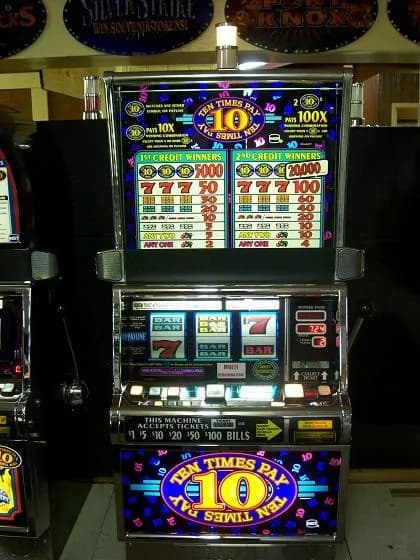
The most popular home slot machine in America. Physical spinning reels, the mechanical click-and-stop of a real casino machine, and the games that defined American slot culture: Double Diamond, Triple Diamond, Blazing 7s, Red White and Blue, Five Times Pay, Wheel of Fortune. Every unit we stock qualifies for NC and GA addresses.
Price: $995 to $1,995 fully refurbished with 1-year warranty.
IGT Game King Multi-Game (1994–2001 qualifying units)
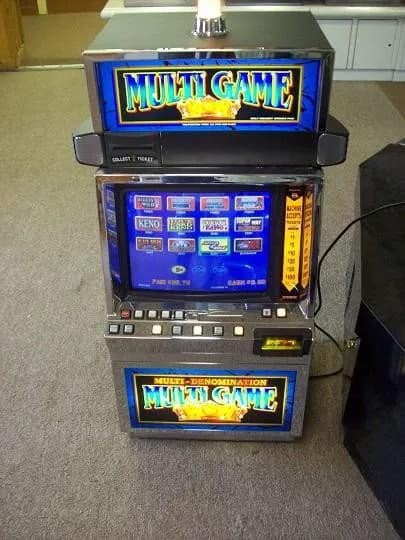
The Game King puts 30 to 80+ games on one machine. Video poker, video slots, keno, and blackjack in a single cabinet. The gold standard for home game rooms where variety matters. Pre-2002 units qualify for NC and GA addresses.
Price: $1,295 to $2,095 depending on configuration.
Bally Pro Series (1990s–early 2000s)
Bally's Pro Series machines from the 1990s run games like Blazing 7s and Quick Hit with premium cabinet construction. All qualify for NC and GA. The Bally U-Spin machines with the physical spinning bonus wheel on top are particularly impressive and legal in both border states.
Price: $1,095 to $1,895 depending on model.
FAQ for South Carolina Residents
Can I own a slot machine if it's just for personal use with no payout?
No. South Carolina's prohibition is based on possession, not intended use or operation. The statute does not provide a personal-use or no-gambling-payout defense.
What about a very old antique machine, like from the 1940s?
No. South Carolina's law does not contain an antique exemption of any kind. Unlike most states that restrict ownership to machines 25 years old or older, South Carolina prohibits all private possession regardless of the machine's age or historical value.
Can I store a machine in South Carolina if it's disabled or decorative?
The law covers possession of slot machines regardless of their operational status. A decorative non-functional cabinet that was originally a slot machine may still fall within the prohibition's scope. We do not recommend testing this theory.
Are video poker machines treated differently?
No. Video poker machines fall within the same prohibition as slot machines under South Carolina's broad statute. The 2025 Court of Appeals decision specifically confirmed that the prohibition extends beyond traditional three-reel mechanical machines.
Is there a way to get a permit or license to own one for private use?
No. South Carolina does not issue permits for private possession of slot machines. Gaming licenses in South Carolina apply to commercial gambling operations and charitable gaming events — not private home ownership of gaming devices.
My neighbor in South Carolina has a slot machine. Is that legal?
No. Your neighbor's possession is not legal under South Carolina law. The fact that enforcement of private home possession is less visible than commercial enforcement does not make it legal, and it does not create a safe harbor for you.
Can I buy a machine online and have it shipped here?
We will not ship to South Carolina addresses. Any dealer who ships to South Carolina is either unaware of the law or choosing to ignore it. That places you as the buyer at legal risk.
Do any South Carolina cities or counties have different rules?
No. South Carolina's gambling device prohibition is state law. Individual municipalities cannot create exemptions that override it.
I live near the North Carolina border — how does that work?
If you have a property in North Carolina that you own or can document as a primary or secondary address, we can ship there. North Carolina follows the 25-year rule, so any machine manufactured in 2001 or earlier qualifies. Many South Carolina residents near the border have mountain cabins or properties in western North Carolina — those addresses work perfectly.
What if I inherit a slot machine from a family member in another state?
Bringing the machine into South Carolina would make it illegal to possess there. If you inherit a machine, keep it at an address outside South Carolina or arrange to sell or store it in a legal state.
The Bottom Line for South Carolina
South Carolina is a prohibited state with an active enforcement history and no age-based exceptions. The 2000 video poker ban, reinforced by the 2025 Court of Appeals decision, reflects a clear legislative and judicial consensus that gambling devices of any type do not belong in private possession in South Carolina.
After 34 years of navigating these laws for customers across the country, we know when a situation has a path and when it does not. South Carolina does not have a path for in-state ownership — not now, not with antique machines, not with any creative framing.
What South Carolina does have is proximity to North Carolina and Georgia, both of which allow qualifying machines under the 25-year rule. If you have property in either state, we can help. Browse our current inventory to see what is in stock and qualifies for those states. Contact us to discuss shipping to a qualifying address. We ship 334 machines to legal addresses across 41 states and we are ready to help you find the right path.
For a complete 50-state breakdown, see our [state-by-state legal guide](/blog/is-it-legal-to-own-a-slot-machine-state-by-state-guide). For what machines qualify in neighboring North Carolina, see our [North Carolina legal guide](/blog/slot-machines-in-north-carolina-legal-guide-2026). For Georgia, see our [Georgia legal guide](/blog/slot-machines-in-georgia-legal-guide-2026).