Slot Machines in Georgia: The Strictest Ownership Law in the South — What You Can Legally Own (2026)
Georgia allows private slot machine ownership only for pre-1950 nonelectronic mechanical machines. This means IGT, Bally, and all modern casino machines are not legal in Georgia. Here is exactly what qualifies, what doesn't, and what your options are as a Georgia buyer.
Georgia is one of the most restrictive states in the country for private slot machine ownership. Where most states apply a 25-year rule — any machine manufactured at least 25 years ago qualifies — Georgia imposes a far stricter standard.
To legally own a slot machine in Georgia for personal home use, the machine must:
1. Have been manufactured before January 1, 1950 2. Be a nonelectronic, mechanical device — no circuit boards, no digital components 3. Pay off by matching symbols on wheels spun by a handle 4. Not be used for gambling
If those requirements sound like a description of the classic "one-armed bandit" floor machine from the 1920s through the 1940s — that is because they are. Georgia's law explicitly restricts legal home ownership to that narrow category.
We have been shipping slot machines to buyers in all 50 states from our warehouse in Kingman, Arizona since 1992. Georgia is one of the states where we have a direct conversation with every prospective buyer before processing an order. This guide explains exactly what you need to know.
What Georgia Law Actually Says
The relevant statute is O.C.G.A. § 16-12-24 — "Possession, manufacture, or transfer of gambling device or parts; possession of antique slot machines."
The core prohibition: possessing a device designed for gambling purposes is a misdemeanor of a high and aggravated nature under Georgia law.
The exception: it is a defense to prosecution for possessing an antique slot machine — but only if the machine meets Georgia's specific statutory definition.
Georgia's legal definition of an antique slot machine:
*"Antique slot machine" means a coin operated, nonelectronic mechanical gambling device that pays off according to the matching of symbols on wheels spun by a handle and was manufactured in its entirety, except for identical replacement parts, prior to January 1, 1950.*
That definition has three parts, and all three must be satisfied simultaneously:
1. Nonelectronic and mechanical — the machine operates entirely through mechanical means. Gears, springs, levers, and cams. No circuit boards, no microprocessors, no electronic bill validators. 2. Symbols on wheels spun by a handle — the machine uses physical reels (wheels) that spin when you pull a lever handle. Not a button-activated electronic device. 3. Manufactured before January 1, 1950 — the complete machine, except for identical replacement parts, must date to before 1950.
An electronic machine from 1998 that happens to be more than 25 years old does not qualify. An electronic machine from 1965 does not qualify. A mechanical machine from 1952 does not qualify. Only a pre-1950, entirely mechanical, handle-operated, reel-based machine meets Georgia's standard.
Why This Matters: Most Casino Machines Do NOT Qualify in Georgia
This is the most important thing for Georgia buyers to understand — and it is the conversation we have every time a Georgia resident contacts us asking about an IGT S2000 or a Bally slot machine.
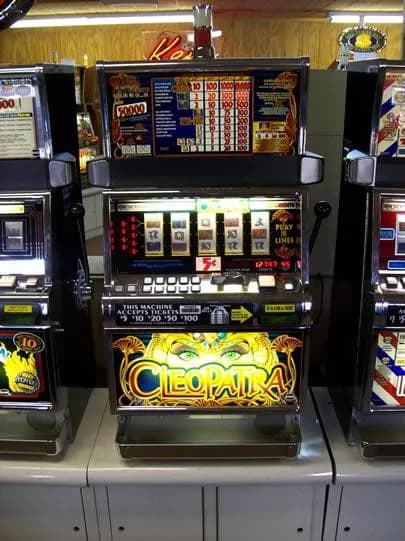
The machines that most buyers picture when they think about a home slot machine — IGT S2000, IGT Game King, Bally S9000, WMS Bluebird, Aristocrat Buffalo — are not legal to own in Georgia for home use.
| Machine | Era | Electronic? | Qualifies in GA? | |---------|-----|-------------|------------------| | IGT S2000 | 1996–2003 | Yes | No | | IGT Game King | 1990s–2000s | Yes | No | | Bally S9000 | 1990s–2000s | Yes | No | | WMS Bluebird | 2001+ | Yes | No | | IGT S-Plus | 1980s–1995 | Yes | No | | Mechanical reel (pre-1950) | Before 1950 | No | Yes |
All modern casino-style slot machines — including machines from the 1960s, 1970s, and 1980s — are electronic devices. They contain printed circuit boards, stepper motors driven by microprocessors, and digital control systems. None of them meet Georgia's nonelectronic mechanical requirement, regardless of their age.
The only machines that qualify under Georgia law are the classic mechanical floor machines from the 1940s and earlier: Mills Novelty, Jennings, Watling, Pace, and Buckley machines from the golden age of American mechanical gaming.
Machines That DO Qualify in Georgia
If you live in Georgia and want to legally own a slot machine, you are looking at the same machines that belonged in saloons and general stores a century ago. These are remarkable pieces of American industrial history — and for the right buyer, they are extraordinary collectibles.
Mills Novelty Company Machines
Mills Novelty Company of Chicago was the dominant force in American slot machine manufacturing from the early 1900s through the 1940s. If you picture a classic one-armed bandit — cast iron and chrome body, fruit symbols on the reels, lever on the right side — you are likely picturing a Mills machine.
Mills produced the Bell machines (derivatives of the original Liberty Bell design), the Slot-O-Fun, the War Eagle, the Roman Head, the Diamond Front, and dozens of other recognizable models across multiple decades. Mechanical in every sense: coin goes in, mechanism activates, reels spin, mechanical comparator reads the symbols, internal hopper releases coins if you win. No electricity required for the fundamental operation.
Collector market price range: Restored Mills machines in excellent condition typically sell for $1,500 to $5,000 depending on the specific model, cabinet condition, and whether original finishes are intact. Rare or especially ornate models command higher prices.
O.D. Jennings Machines
O.D. Jennings & Company of Chicago was Mills' primary competition throughout the golden age. Jennings machines from the 1930s and 1940s are prized by collectors for their build quality and distinct visual character.
The Jennings Standard Chief, Four Star Chief, Club Chief, and Sportsman are among the most commonly found Jennings machines on the collector market. These machines have a slightly different mechanical feel than Mills — many collectors describe Jennings coin mechanisms as notably smooth — and the cabinet styling evolved distinctively through the 1930s and into the 1940s.
Collector market price range: $1,200 to $4,500 for restored examples in good condition. Jennings machines from the early 1940s in original condition command premium interest.
Watling Manufacturing Machines
Watling Manufacturing of Chicago produced machines known for exceptional construction quality and striking visual appeal. The Watling Rol-A-Top — featuring a distinctive coin escalator visible through a glass window in the cabinet front — is among the most visually remarkable machines of the era and is extremely desirable among serious collectors.
Watling machines are less common than Mills and Jennings, and their scarcity combined with collector demand pushes prices higher. A fully restored Rol-A-Top in excellent condition is a showpiece acquisition.
Collector market price range: $2,000 to $6,000+ for well-preserved examples. The Rol-A-Top specifically is at the higher end.
Pace Manufacturing Machines
Pace Manufacturing produced a wide range of mechanical slot machines from the 1920s through the 1940s. The Pace Bantam, Pace Comet, and Pace All Star Comet are the most recognizable Pace machines. They are typically priced lower on the collector market than Mills or Jennings, making them accessible entry points for Georgia buyers who want a qualifying machine without the premium price of the rarest examples.
Collector market price range: $800 to $2,500 for Pace machines in good working condition.
Buckley Manufacturing
Buckley Manufacturing of Chicago produced a smaller catalog of machines now prized as collector's items. Buckley machines are less common than the major manufacturers, which makes good examples especially appealing to serious collectors building a comprehensive antique slot collection.
The Additional Restrictions in Georgia's Law
Georgia's statute carries two additional limitations that do not appear in most other states' antique ownership exceptions:
Prior felony convictions: The antique slot machine defense is explicitly unavailable to any person who has been convicted of a felony in Georgia, in any other state, or under federal law. This applies regardless of whether the prior offense had anything to do with gambling.
Alcohol establishments and clubs: The defense is not available if the antique slot machine is on the premises of a private or public club or in an establishment where alcoholic beverages are sold.
In plain terms: a qualifying pre-1950 machine must be in a private home, not in a bar, not in a private club, and the owner must have no prior felony conviction. A machine displayed and played casually in your personal home by a person without a felony record satisfies all of Georgia's conditions.
What "Not Being Used for Gambling" Means
As with every state that permits antique slot machine ownership, the machine must not be used as a commercial gambling device. Playing a qualifying antique machine casually at home — dropping a nickel or quarter in, pulling the handle, watching the mechanical reels click into position — is personal entertainment, not gambling in the legal sense.
What is not permitted: - Charging guests or visitors to play the machine - Operating the machine for profit in any form - Running it as part of any commercial gambling enterprise or event - Keeping it in any commercial establishment
Personal home enjoyment — the entire point of owning one of these machines — is exactly what Georgia's narrow antique exception is designed to permit.
Georgia Compared to Other States
Georgia's restriction is uniquely stringent. Here is how Georgia compares to surrounding states and the national standard:
| State | Ownership Rule | What qualifies in 2026 | |-------|---------------|------------------------| | Georgia | Pre-1950 mechanical only | Pre-1950 mechanical machines only | | Florida | 20-year rule | Any machine from 2006 or earlier | | Alabama | 25-year rule (antique) | Any machine from 2001 or earlier | | North Carolina | 25-year rule | Any machine from 2001 or earlier | | Tennessee | Prohibited | None | | South Carolina | Prohibited | None | | Most U.S. states | 25-year rule | Any machine from 2001 or earlier |
Florida — Georgia's immediate neighbor to the south — uses a 20-year rule. Florida buyers can legally own virtually any machine from the 1990s and early 2000s. Georgia buyers, by contrast, are limited to machines that are more than 76 years old.
For a full 50-state comparison, see our state-by-state legal guide.
Are There Any Modern Machines Legal in Georgia?
No — not without an active commercial gaming license, which is a separate regulatory framework entirely. Georgia's antique machine exception applies only to the pre-1950 mechanical category. There is no provision in Georgia law equivalent to other states' 25-year rules that would allow a 1995 or 1998 electronic machine to be legally owned for home use.
The pre-1950 cutoff and the nonelectronic mechanical requirement exist together as a single standard. Meeting one without the other is not sufficient.
If you want a casino-style machine with electronic reels, bill acceptor, and digital sound in Georgia, Georgia law does not allow private home ownership of that machine. We will not ship electronic slot machines to Georgia addresses.
How We Can Help Georgia Buyers
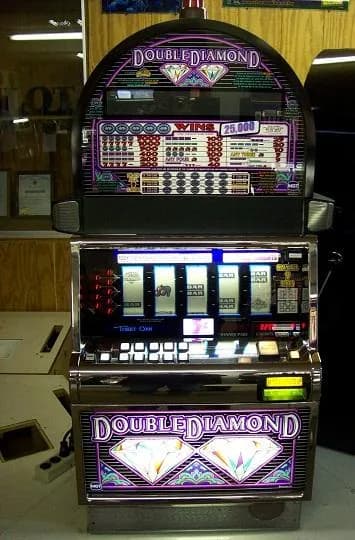
Used Slot Shop's primary inventory is casino-era electronic slot machines — IGT, Bally, WMS, and Aristocrat machines from the 1990s through the 2000s. These do not qualify in Georgia.
However, we do occasionally carry pre-1950 mechanical machines. If you are a Georgia collector looking for a qualifying antique, contact us and tell us what you are looking for. We can let you know when qualifying machines come through our inventory, and we can point you toward the antique slot machine collector community where pre-1950 machines change hands regularly.
For buyers who are committed to a modern casino-style machine: if you have family or a property in an unrestricted state like Texas, Arizona, or Nevada, those are excellent locations to enjoy a machine legally. Many Georgia buyers purchase a machine for a vacation home, ranch property, or out-of-state relative's location rather than their Georgia residence.
For everything you need to know about pre-1950 mechanical machines — the manufacturers, the models, what to look for, what to avoid, and what they are worth — our vintage and antique slot machine collector's guide is the most complete resource we have produced.
Shipping Qualifying Machines to Georgia
When we ship qualifying pre-1950 mechanical machines to Georgia, our standard LTL freight process applies: palletized, shrink-wrapped, liftgate delivery to your curb. Atlanta, Savannah, Augusta, Columbus, Macon, and addresses throughout Georgia receive the same freight service.
Shipping from Kingman, Arizona to Georgia typically runs $450 to $575 depending on your delivery ZIP code. Transit time is typically 6 to 9 business days.
For qualifying vintage machines, we document provenance as completely as possible — manufacturer identification, approximate production era, and any historical documentation available. We cannot always provide manufacture dates to the exact year for machines from the 1920s and 1930s, but we can document that a machine clearly predates 1950 based on mechanical configuration, manufacturer records, and serial number ranges.
See our shipping guide for delivery logistics and our machine moving guide for getting a machine from the curb into your home.
FAQ for Georgia Buyers
Is it legal to own a slot machine in Georgia?
Only under very specific conditions. Georgia O.C.G.A. § 16-12-24 permits private possession of antique slot machines defined as nonelectronic mechanical devices with handle-spun reels manufactured before January 1, 1950. Modern electronic machines — all casino-style slot machines from the 1960s onward — are not legal to own in Georgia for home use. See our state-by-state legal guide for the full comparison.
Does Georgia have the 25-year rule?
No. Georgia does not follow the standard 25-year antique slot machine rule. Georgia requires machines to predate 1950 AND be entirely nonelectronic and mechanical. A machine from 1990 — which qualifies in states with a 25-year rule — is not legal to own in Georgia under the antique exception. For more on how the 25-year rule works, see our antique slot machine laws guide.
Can I own an IGT S2000 or Bally electronic slot machine in Georgia?
No. These machines are electronic gambling devices under O.C.G.A. § 16-12-24 with no applicable antique exception. The nonelectronic mechanical requirement disqualifies all modern casino-style slot machines regardless of their age.
What about mechanical slot machines from the 1950s or 1960s?
Georgia's cutoff is January 1, 1950. A machine manufactured in 1951, even if entirely mechanical, does not meet the requirement. The statute is explicit: "manufactured in its entirety...prior to January 1, 1950."
Can I own a qualifying machine if I have a prior felony conviction?
No. Georgia's antique slot machine defense is explicitly unavailable to persons with prior felony convictions under Georgia law, any other state's law, or federal law.
Where can I find pre-1950 qualifying machines?
Antique slot machine dealers, estate sales, auction houses specializing in Americana and gaming memorabilia, and the active antique slot collector community are the primary sources. Contact us — we will notify you when we have qualifying machines in inventory.
Do you ship to Georgia?
Yes — qualifying machines only. We verify compliance with O.C.G.A. § 16-12-24 before processing any Georgia order and will not ship electronic casino machines to Georgia addresses.
What documentation should I keep for a qualifying machine?
Keep: (1) the manufacturer identification plate inside the machine showing model and serial number, (2) any purchase documentation from the seller with provenance details, and (3) any historical records or letters of authenticity confirming the pre-1950 manufacture date. These establish the antique defense if it ever needs to be asserted.
I want an electronic casino machine — what are my options?
If you have property in an unrestricted state (Arizona, Texas, Nevada, Ohio, Virginia, and others), purchasing a machine for that location is a clean solution. Many Georgia residents maintain this arrangement. See our complete buyer's guide for everything you need to know about choosing the right machine.
Ready to Find a Qualifying Machine?
Georgia's strict law creates a narrow but genuinely interesting collecting category. Pre-1950 mechanical slot machines are pieces of American industrial history — objects that represent the beginning of a multi-hundred-billion-dollar gaming industry.
If you are a Georgia collector interested in a qualifying machine, contact us. We will tell you what we have available and can keep you on a notification list for qualifying machines as they come through our inventory.
For a complete look at the pre-1950 machines that qualify in Georgia, our vintage and antique slot machine collector's guide covers Mills, Jennings, Watling, Pace, and Buckley machines in full detail — including what they look like, how they work, current collector market prices, and what to check before buying.
For the full 50-state legal comparison, see our state-by-state guide to slot machine ownership laws.