Slot Machines in Washington State: What's Legal to Own, Which Machines Qualify, and Where to Buy (2026)
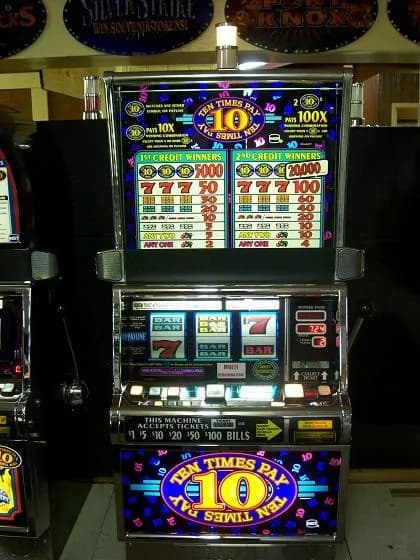
Washington allows private ownership of slot machines 25 years or older under RCW 9.46.235. Here is exactly what the law says, which machines qualify in 2026, and how to buy one legally.
Washington is home to more than 7.8 million people and some of the most serious slot machine collectors we serve. It is also a state with a busy tribal gaming scene — over two dozen tribal casinos operate across the state, and Washingtonians know their slot machines. That familiarity translates into a healthy demand for home ownership, and the good news is that Washington law is clear and permissive for machines that meet the age requirement.
We ship machines to Washington buyers regularly from our warehouse in Kingman, Arizona. This guide explains exactly what Washington law allows, which machines qualify, and what to do to buy legally and confidently.
The Short Answer
Washington allows private ownership of slot machines that are 25 years old or older, provided the machine is not operated for gambling purposes. This is established under Revised Code of Washington § 9.46.235. Any machine manufactured in 2001 or earlier qualifies in 2026.
Washington law is explicit on the age threshold: a slot machine is conclusively presumed to be an antique if it is at least 25 years old. That word "conclusively" matters — once your machine is confirmed 25 years old, the antique status is not a matter of interpretation or discretion. It is established under the statute.
What Washington Law Actually Says
RCW 9.46.235 is titled "Slot machines, antique — Defenses concerning — Presumption created." The key text of the statute reads:
"For purposes of a prosecution under RCW 9.46.215 or a seizure, confiscation, or destruction order under RCW 9.46.231, it shall be a defense that the gambling device involved is an antique slot machine and that the antique slot machine was not operated for gambling purposes while in the owner's or defendant's possession."
The statute defines what qualifies as antique:
"A slot machine shall be conclusively presumed to be an antique slot machine if it is at least twenty-five years old."
And the statute specifies how the machine can be operated:
"Operation of an antique slot machine shall be only by free play or with coins provided at no cost by the owner."
In plain terms: if you own a machine that is 25 years old or older, and you do not operate it for gambling purposes (you play for free or with coins you supply to guests at no charge), you have a complete legal defense against any prosecution or seizure under Washington's gambling device statutes.
What "Defense to Prosecution" Means in Practice
RCW 9.46.235 establishes an affirmative defense, not a license or permit that pre-authorizes possession. This is important to understand. The statute means that if you are ever challenged about owning a slot machine, you show that the machine meets the age and use requirements, and that defense applies fully.
In 34 years of shipping machines to customers across the country, we have never had a Washington buyer report trouble over a qualifying machine in personal home use. Washington law enforcement does not target collectors. The defense exists to protect collectors who already follow the rules — which, if you are buying a documented, age-verified machine for personal entertainment, is exactly what you are doing.
To use this protection, two things must be true:
1. The machine is 25 years old or older — manufactured before 2001 in 2026 2. It is not operated for gambling purposes — no charging people to play, no commercial gambling
Which Machines Qualify in Washington in 2026
In 2026, any machine manufactured in 2001 or earlier meets the 25-year threshold. The qualifying pool includes a wide and excellent selection of machines.
IGT S2000 (1996–2004)
The IGT S2000 is the most popular home slot machine in the country, and every unit we carry qualifies under Washington's 25-year rule. The S2000 was produced from 1996 through the early 2000s — all of those machines cleared 25 years ago or are clearing the threshold now.
Classic S2000 games available:
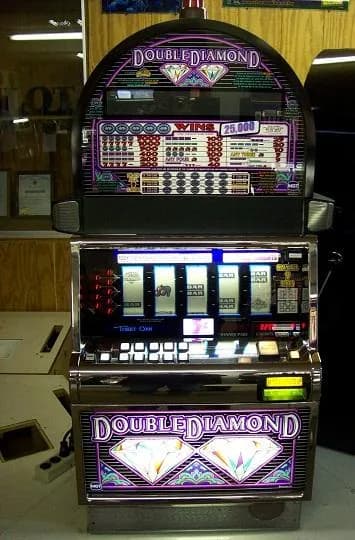
- Double Diamond — The most iconic mechanical reel game ever made. Single payline, 2x multiplier wild. Clean, satisfying, endlessly playable.
- Triple Diamond — Three-reel mechanical game with a 3x multiplier wild (9x for two wilds). Higher swings than Double Diamond.
- Red White and Blue — Patriotic seven-symbol game. A casino staple for four decades.
- Five Times Pay — 5x and 25x multiplier wilds for high-variance play.
- Blazing 7s — Seven-themed title on the S2000 platform, one of the most recognized slot games in the country.
- Wheel of Fortune — Premium S2000 variant with a motorized bonus wheel on top. The most theatrical home machine you can buy.
Every IGT S2000 in our inventory qualifies for Washington. Our complete IGT S2000 guide goes deeper on why this platform is the right choice for most home buyers.
IGT S-Plus (Pre-1996)
The predecessor to the S2000, produced through 1996. Every S-Plus is at least 30 years old and qualifies under Washington law without question. These are simpler machines with fewer game options but genuine casino hardware at lower price points.
IGT Game King (Late 1990s–Early 2000s)
The IGT Game King is a multi-game video poker and slots platform. Units manufactured in 2001 or earlier qualify under RCW 9.46.235.
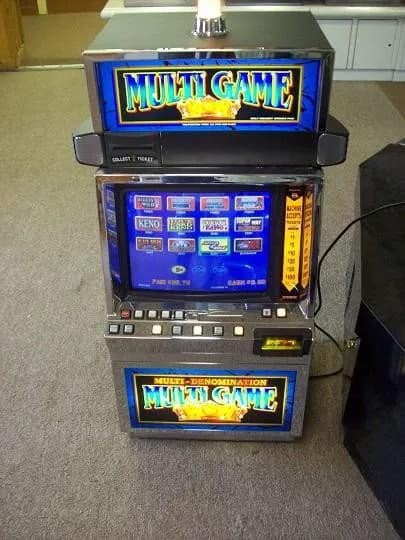
The Game King is our top recommendation for Washington buyers who want variety. A single machine gives you 50 or more poker and slot games — every variation of video poker from Jacks or Better to Double Double Bonus, plus keno, video slots, and more. The slant-top cabinet is comfortable for seated play, and the touch screen interface makes switching between games effortless. See our video poker machine guide for the full Game King lineup.
Bally S9000 and Alpha Series (1990s–Early 2000s)
Bally's S9000 platform ran some of the most popular games of the 1990s, including Blazing 7s, Quick Hits, and various progressively themed titles. Virtually every S9000 unit on the secondary market is from the 1990s and easily qualifies.
The Bally Alpha 1 from the same era offers slightly more polished aesthetics at a comparable price. Both platforms are reliable, well-documented, and have solid parts availability. Our Bally slot machine guide covers the full Bally lineup with specs and price ranges.
Bally Game Maker (Late 1990s)
The Bally Game Maker is a multi-game platform offering a variety of poker and slot titles on one cabinet. Late-1990s units qualify comfortably. If you want multiple games in one machine and prefer Bally's look and feel to IGT's, the Game Maker is a solid choice.
Williams WMS Bluebird (Original, Early 2000s)
The original WMS Bluebird cabinet — introduced in the early 2000s — brought animated video bonus rounds to a wider audience. Units from 2001 and earlier qualify. These machines play differently from mechanical reel machines: virtual reels on a video screen, elaborate bonus games triggered by scatter symbols, second-screen features. If you want something more visually dynamic than a mechanical reel spinner, the original Bluebird is worth considering. See our WMS Bluebird guide for details.
What "Not for Gambling Purposes" Means
RCW 9.46.235 requires that an antique slot machine not be operated for gambling purposes. The statute also specifies that operation must be "only by free play or with coins provided at no cost by the owner." Together, these clauses define exactly how you can use your machine legally.
Legal home uses: - Personal entertainment in your home, basement, man cave, or game room - Playing with family and friends for fun — no stakes, no charges to play - Displaying the machine as a collectible or conversation piece - Operating in free-play mode (credits added by button press, no coins required) - Providing coins to guests at no cost to them so they can play
Not legal under Washington law: - Charging people to play the machine - Operating the machine as part of a commercial gambling setup - Running the machine in a business where money changes hands in exchange for play - Any use that constitutes operating a gambling device for profit
The "coins provided at no cost by the owner" language is notable — Washington law specifically envisions home owners stocking the machine's hopper and letting guests play without paying. This is exactly how most of our customers operate their machines when they have guests: you supply the tokens or quarters, guests play, everyone has fun, and no money changes hands.
Free Play Mode: The Simplest Legal Configuration
For Washington home buyers, free play mode is the cleanest possible setup. In free play, you press a button to add credits rather than inserting any coins. The machine plays identically to coin mode — same reels, same odds, same sounds — but no currency transaction takes place.
This configuration satisfies the spirit of RCW 9.46.235's restrictions completely. There is no coin operation, no gambling economy, no possibility of anyone paying to play. It is purely an entertainment device.
Free play mode is available on every machine we sell and can be configured by pressing a few buttons in the operator menu. We configure it for you before shipping if you prefer. Our free play mode guide explains the full setup process and what to expect.
Washington's Gambling Commission and Private Ownership
The Washington State Gambling Commission (WSGC) regulates gambling activity in the state. For private home owners of qualifying antique machines, the WSGC's regulatory authority is not directly relevant — RCW 9.46.235 creates the legal defense at the state statute level, not the regulatory level.
However, it is worth understanding Washington's broader gambling landscape, particularly if you are near one of the state's 30-plus tribal casinos. Tribal casinos in Washington operate under compacts between tribal nations and the state, regulated separately from commercial and private gambling. Owning a personal antique slot machine at home has no connection to tribal gaming operations or commercial gambling licensing. The two exist in entirely separate legal categories.
If you have specific questions about your situation — particularly if you own a business and are curious about display use — contacting the WSGC directly or consulting a Washington gaming attorney is worthwhile. For straightforward home ownership of a qualifying antique machine for personal entertainment, RCW 9.46.235 is clear.
Local Regulations: Counties and Cities
Washington gives counties and cities authority to regulate gambling activities within their jurisdictions. In most cases, local ordinances follow the state framework, and owning a qualifying antique machine for personal home use is not something local governments actively regulate or enforce.
A few practical steps worth taking:
Check with your city or county clerk if you are in a city with historically active local gaming enforcement, such as certain jurisdictions in King County, Snohomish County, or Pierce County around Seattle, Bellevue, and Tacoma. A quick inquiry confirms whether local ordinances add any layer beyond state law.
If you live in a homeowners association, check your CC&Rs for any restrictions on gaming equipment. HOA rules are contractual, not criminal — a restriction means potential fines, not legal jeopardy. Most HOAs only care if equipment is visible from outside your home, which a machine inside your game room or basement will not be.
For the vast majority of Washington homeowners in standard residential settings, RCW 9.46.235 combined with proper documentation covers your ownership completely.
Documentation: What to Keep With Your Machine
Because Washington's protection under RCW 9.46.235 is tied to the machine's age, documentation of manufacture date is your primary protection.
Certificate of manufacture date: We provide this with every machine sold to age-restricted states including Washington. It states the machine's serial number, model, and confirmed manufacture date. Keep this with the machine or in your personal records.
Manufacturer's plate: Inside the main door of your machine, you will find a plate showing the serial number and manufacture date. This is the primary record of age. IGT, Bally, and other major manufacturers maintain production records that can verify dates from serial numbers.
Purchase receipt: Your receipt from us, combined with the manufacturer certificate, establishes a clean paper trail showing legal acquisition of a qualifying machine.
We have never had a Washington customer need to use this documentation in any legal context, but having it available means you are always in the best possible position if any question ever arises.
Shipping to Washington: What to Expect
We ship from Kingman, Arizona via LTL freight with liftgate delivery to your curb. Here is what the process looks like for Washington customers.
Transit time: Washington destinations typically run 4 to 7 business days. Western Washington (Seattle, Tacoma, Bellevue, Olympia, Everett) runs 5 to 7 days. Eastern Washington (Spokane, Yakima, Tri-Cities) runs 4 to 6 days, as freight routes run more directly.
Shipping cost: Washington shipments typically run $325 to $450 depending on your specific zip code and current freight rates. We quote exact shipping at time of order based on your address.
Liftgate delivery: All shipments include liftgate service. The freight driver lowers your palletized machine from truck height to ground level. You receive the machine at your curb or driveway. Getting it inside is your responsibility — most customers use an appliance dolly and a willing friend. See our slot machine moving guide for step-by-step instructions.
Documentation: Washington customers receive a certificate of manufacture date with every order. We verify age compliance before processing any Washington shipment.
Recommended Machines for Washington Buyers
Based on what Washington buyers tell us they want and what pairs best with the 25-year requirement, here are our top recommendations.
Best overall — IGT S2000 in Double Diamond or Triple Diamond. The definitive home slot machine. Legal in Washington, prices from $995 to $1,495 depending on theme and condition. Mechanical reels, proven reliability, easy maintenance. Read our full S2000 guide.
Best for variety — IGT Game King multi-game video poker. Fifty or more poker and slot games on one cabinet. Legal in Washington on units from 2001 or earlier. Prices from $1,995 to $3,495. Read our video poker guide.
Best for Blazing 7s fans — Bally S9000 in Blazing 7s. The platform that ran one of the most beloved slot games of the 1990s. Legal in Washington, competitively priced at $1,295 to $1,495. Read our Bally guide.
Best for premium aesthetics — WMS Bluebird original with a licensed title. Video bonus rounds, animated graphics, and engaging second-screen features that mechanical machines cannot offer. Legal in Washington on early units. Read our WMS Bluebird guide.
All of these are 25 or more years old and qualify under RCW 9.46.235. Every purchase includes manufacturer documentation and free lifetime technical support.
FAQ
Is it legal to own a slot machine in Washington state?
Yes, if the machine is at least 25 years old and is not used for gambling purposes. RCW 9.46.235 provides a complete legal defense for owners of antique slot machines (those at least 25 years of age) that are operated only by free play or with coins provided at no cost. In 2026, this means machines manufactured in 2001 or earlier.
What is the specific Washington state law that allows this?
Revised Code of Washington § 9.46.235, titled "Slot machines, antique — Defenses concerning — Presumption created." You can read the full text at app.leg.wa.gov by searching for RCW 9.46.235.
Do I need a license or permit in Washington state?
No license or permit is required for private home ownership of a qualifying antique slot machine for personal entertainment. Washington gambling licensing applies to commercial gambling operations, not private collections.
Can I operate the machine with real coins or tokens?
Yes. The statute allows operation "with coins provided at no cost by the owner." You can fill the hopper with tokens or quarters and let guests play without charging them. What you cannot do is charge people to play.
What if my city or county has additional restrictions?
Local jurisdictions in Washington can layer additional ordinances on top of state law. The state law defense still applies, but local rules can add requirements in certain areas. A quick check with your city or county clerk resolves this for your specific address.
Can I buy a machine manufactured after 2001?
Not for Washington state delivery. Machines manufactured after 2001 do not meet the 25-year threshold in 2026, so we do not ship non-qualifying machines to Washington. The eligible window expands each year — a machine from 2002 will qualify starting in 2027.
What if I have a Wheel of Fortune machine or another machine with a bonus wheel?
Machines with bonus hardware — like the Wheel of Fortune S2000 with its motorized top wheel — are treated the same as any other slot machine under Washington law. If the machine is 25 years old and not used for gambling, the statute's defense applies. The presence of bonus hardware does not change the analysis.
How many machines can I own?
RCW 9.46.235 does not specify a maximum number of qualifying antique machines for private collectors. The same rules apply to each machine: at least 25 years old, not operated for gambling purposes. Washington collectors with multiple machines in a home game room are operating well within the law's intent.
What happens if I move out of Washington?
If you move to another state, your machine's legality is governed by your new state's law. Most states allow ownership of 25-year-old machines, so your qualifying machine typically remains legal. Our complete state-by-state legal guide covers every state's rules in detail.
What documentation should I keep to prove the machine qualifies?
Keep the certificate of manufacture date we provide with every machine, plus your purchase receipt. The machine's internal manufacturer plate shows its serial number and production date. These three items together — certificate, receipt, and manufacturer plate — document your machine's age completely.
Ready to Order?
We ship to Washington buyers every week and know the state's age documentation requirements inside and out. Browse our current inventory to see qualifying machines in stock, or contact us to discuss which machine fits your home.
Every Washington order includes the manufacture date certificate required to establish RCW 9.46.235 compliance, free lifetime tech support, and our 1-year warranty. We have been doing this since 1992.
For the complete picture of slot machine ownership laws across all 50 states, see our state-by-state legal guide. For details on why the 25-year rule exists and how it applies nationally, see our antique slot machine laws guide.